Dredge pump efficiency loss costs operations time and money. When your pump stops moving material at expected rates, production slows and project deadlines slip. The challenge is pinpointing whether the problem stems from cavitation, sediment transport imbalance, suction issues, or wear conditions.

This guide walks you through a step-by-step process to diagnose exactly what is reducing your dredging pumping efficiency. DAE Pumps helps dredging teams identify the root cause and determine whether operational adjustments or equipment changes can restore performance.
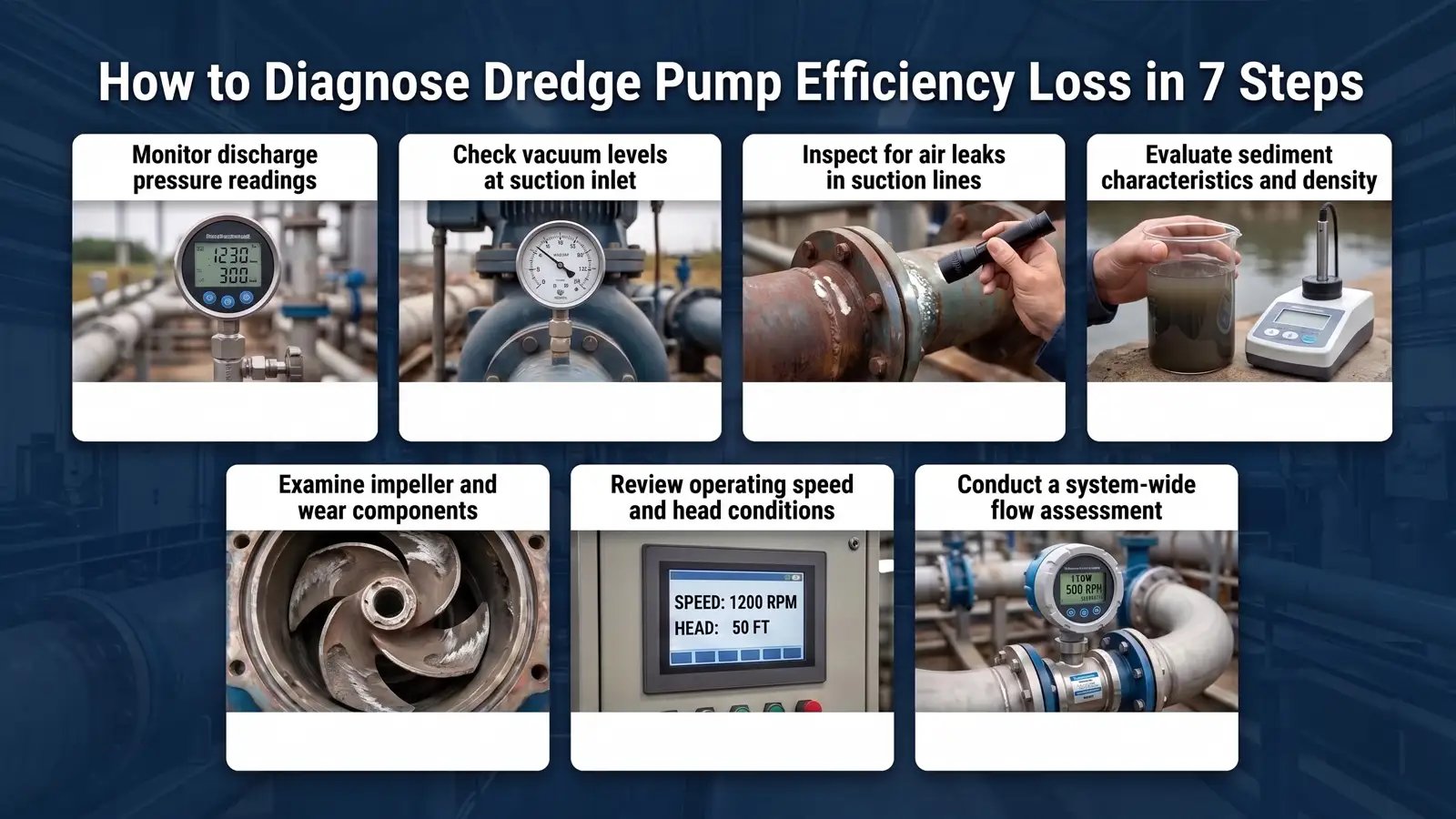
Quick Guide: How to Diagnose Dredge Pump Efficiency Loss in 7 Steps
- Monitor discharge pressure readings: Track pressure fluctuations that signal cavitation or internal pump problems.
- Check vacuum levels at suction inlet: Verify vacuum readings stay below cavitation threshold for your pump model.
- Inspect for air leaks in suction lines: Locate and seal any air entry points disrupting pump prime.
- Evaluate sediment characteristics and density: Assess material properties affecting transport and pump loading.
- Examine impeller and wear components: Identify erosion patterns indicating cavitation or abrasive damage.
- Review operating speed and head conditions: Confirm pump operates within design parameters for your application.
- Conduct a system-wide flow assessment: Use DAE Pumps flow meters to verify actual versus expected output.
How to Identify and Fix Dredge Pump Efficiency Problems
1. Monitor Discharge Pressure Readings
Discharge pressure is your first indicator of pump health. A sudden drop in pressure during normal operation signals cavitation or suction problems. Typically, pressure drops 10 to 20 percent when cavitation occurs rapidly due to cave-in or choke-off at the suction inlet.
Fluctuating or fluttery discharge pressure almost always indicates that pump performance is being affected by cavitation. Track pressure readings over time to establish baseline values. When pressure deviates from normal patterns without changes in pump speed, investigate suction conditions immediately.
Install a reliable pressure gauge on the discharge line if you do not already have one. Record readings at regular intervals during operation. Consistent monitoring helps you catch efficiency loss early before it causes mechanical damage.
2. Check Vacuum Levels at Suction Inlet
Vacuum readings indicate the pressure conditions at your pump's suction inlet. When vacuum reaches approximately 25 inches of mercury, cavitation becomes likely. At this point, water begins to vaporize in the impeller eye area, creating bubbles that damage internal components.
The effective vacuum available for lifting solids depends on several factors: your operating elevation above sea level, the pump's Net Positive Suction Head Required (NPSHR), and whether air leaks exist in the suction pipe. Higher elevations reduce available vacuum, while air leaks consume vacuum capacity that should be moving material.
Use your vacuum readings to calculate available suction head (NPSHA) specification, and confirm it stays above the pump's NPSHR with a safety margin. If vacuum runs consistently near the cavitation threshold, reduce suction lift or installing a submersible pump closer to the material source to reduce suction lift requirements.
3. Inspect for Air Leaks in Suction Lines
Air leaks severely impair dredge pump function. Even a small air leak can reduce pumping capacity, while more significant air intrusion causes loss of prime. Common leak sources include loose fittings, cracked hoses, worn packing glands, and damaged seals.
Start by examining all visible connections on the suction side of your pump. Look for hose deterioration, loose clamps, and gaps at flanged connections. Check the packing gland for proper adjustment. Packing that is too loose allows air to enter the pump casing.
Verify adequate service water flows to the packing gland. This water creates a seal that prevents air infiltration while cooling and lubricating the packing. Insufficient service water supply is a common cause of air-related efficiency loss in hydraulic dredge pumps.
4. Evaluate Sediment Characteristics and Density
The material you pump directly affects efficiency. Heavy sediments require more vacuum to lift, reducing the effective vacuum available for production. When sediment density exceeds pump design parameters, flow rates drop and the pump works harder to move less material.
Observe the material characteristics at your dredging site. Note whether sediment is loose sand, compacted clay, gravel, or mixed debris. Dense or compacted material requires more energy to transport than loose sediment at equivalent volumes.
Sediment transport balance matters significantly. If your pipeline velocity drops below critical speed, solids settle in the discharge line, increasing resistance and reducing overall system efficiency. Maintaining target pipeline velocity ensures material stays in suspension throughout the discharge path.
5. Examine Impeller and Wear Components
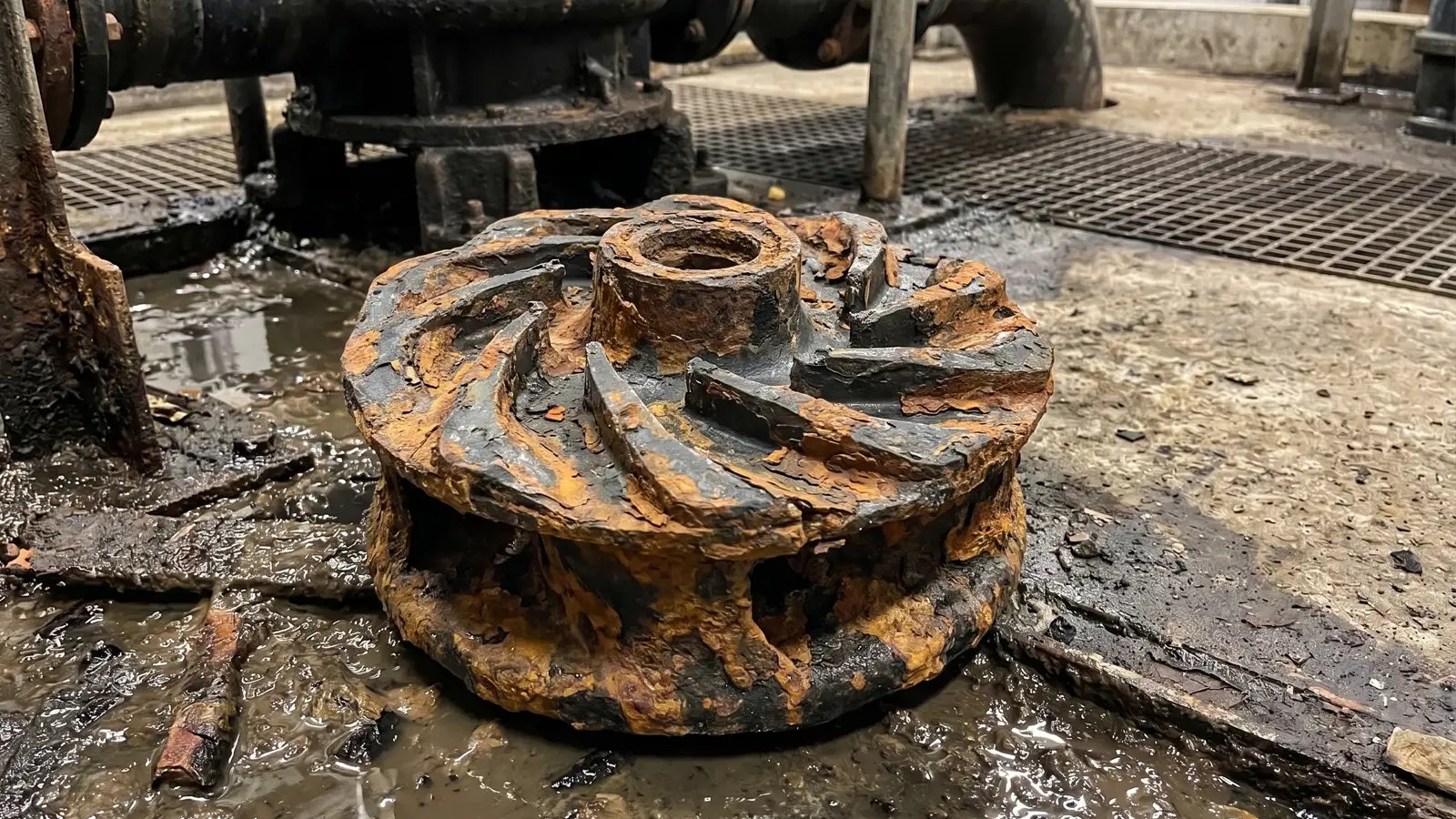
Worn impellers reduce efficiency gradually. Abrasive materials erode impeller blades over time, decreasing the pump's ability to create suction and move material. A fish-scale-like wear pattern on the backside of impeller vanes indicates cavitation damage specifically.
Inspect your impeller for erosion, pitting, or missing sections. Measure blade thickness and compare against original specifications. Excessive wear (more than 10 percent of blade thickness lost) typically requires replacement to restore full pumping capacity.
Also examine wear liners, volute, and casing components. DAE Pumps builds equipment with hi-chrome materials (Brinell hardness of 600) for extended service life in abrasive conditions. If your current components show significant wear, upgrading to more durable materials reduces maintenance frequency.
6. Review Operating Speed and Head Conditions
NPSHR increases with flow rate and operating speed. Running your pump beyond its design point accelerates cavitation and wear. Verify that current operating conditions match the pump's rated specifications.
Check your pump curve documentation for performance data at various combinations of flow and head. If you are pushing higher production than the pump was designed for, efficiency loss is expected. Reducing operating speed or head requirements can restore performance in some cases.
Surface speed at the impeller eye should stay below 3,000 feet per minute in most applications. Exceeding this threshold increases cavitation risk regardless of other operating conditions. Adjusting pump speed to stay within this limit protects against cavitation damage.
7. Conduct a System-Wide Flow Assessment
Accurate flow measurement confirms whether efficiency loss is real or perceived. Install ultrasonic flow meters to measure actual gallons per minute at key points in your system. Compare measured flow against expected output based on pump specifications and operating conditions.
A system-wide assessment considers the entire pumping path from suction to discharge. Identify restrictions, elevation changes, and friction losses that reduce delivered flow. Sometimes efficiency loss relates to pipeline configuration rather than pump condition.
Document your findings and track performance trends over time. Regular flow monitoring helps you distinguish between gradual wear and sudden problems requiring immediate attention.
What Causes Cavitation in Dredge Pumps?
Cavitation occurs when pressure in the pump inlet drops below the vapor pressure of water. At this point, water vaporizes and forms millions of tiny bubbles near the impeller eye. As these bubbles move to higher-pressure areas, they collapse violently in implosions that damage metal surfaces.
 Several conditions trigger cavitation in dredging operations:
- Suction vacuum too high due to excessive dredging depth or restricted inlet
- Operating elevation reducing available atmospheric pressure
- Air leaks in suction lines consuming vacuum capacity
- Pump speed exceeding design parameters for available suction head
- Gases trapped in sediment deposits
Symptoms of cavitation include a popcorn-popping sound, violent vibration, rumbling noise, and the characteristic pressure drop. Some operators mistake these sounds for rocks passing through the pump. If lowering vacuum does not calm a fluttery discharge pressure, check for impeller damage that may require replacement.
Why Does Sediment Transport Efficiency Decrease Over Time?
Sediment transport efficiency depends on maintaining adequate pipeline velocity. When flow rate drops, solids begin settling in horizontal sections of discharge pipe. This buildup increases friction and further reduces flow, creating a cascading efficiency problem.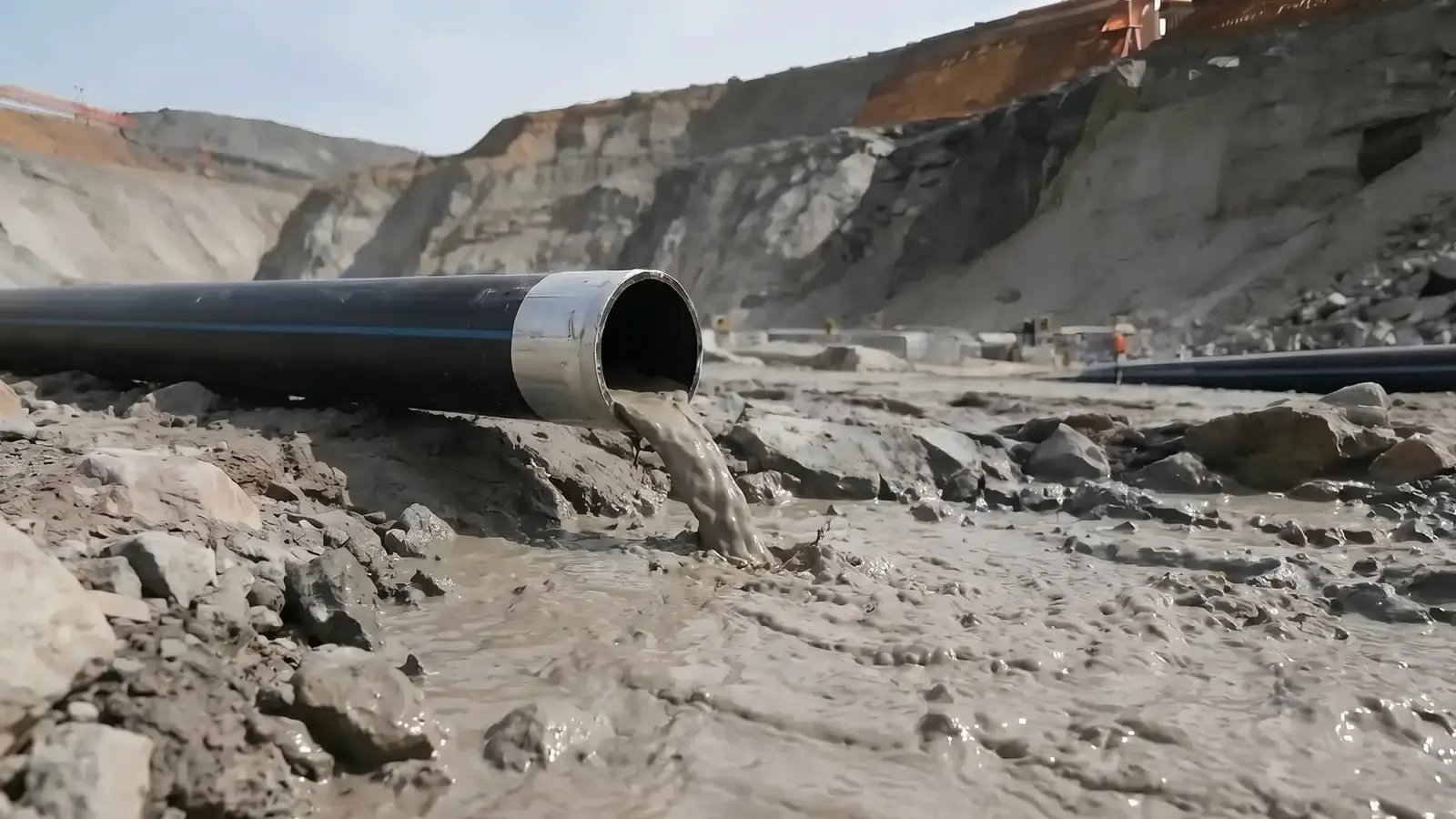 Several factors contribute to declining transport efficiency:
- Impeller wear reducing pump output
- Partial blockages in suction or discharge lines
- Air infiltration decreasing pump prime
- Operating at depths exceeding pump capacity
- Pipeline damage or scaling increasing friction
Regular inspection of discharge pipes helps identify buildup before it severely impacts operations. Pipeline blockages often develop gradually in bends and low points where flow velocity decreases.
How DAE Pumps Helps You Restore Dredging Performance
DAE Pumps manufactures heavy-duty dredge pumps designed for demanding sediment handling applications. The open impeller design and powerful suction allow for easy passage of large solids and abrasive materials. High tolerance between impeller and pump casing enables handling larger particles without clogging.
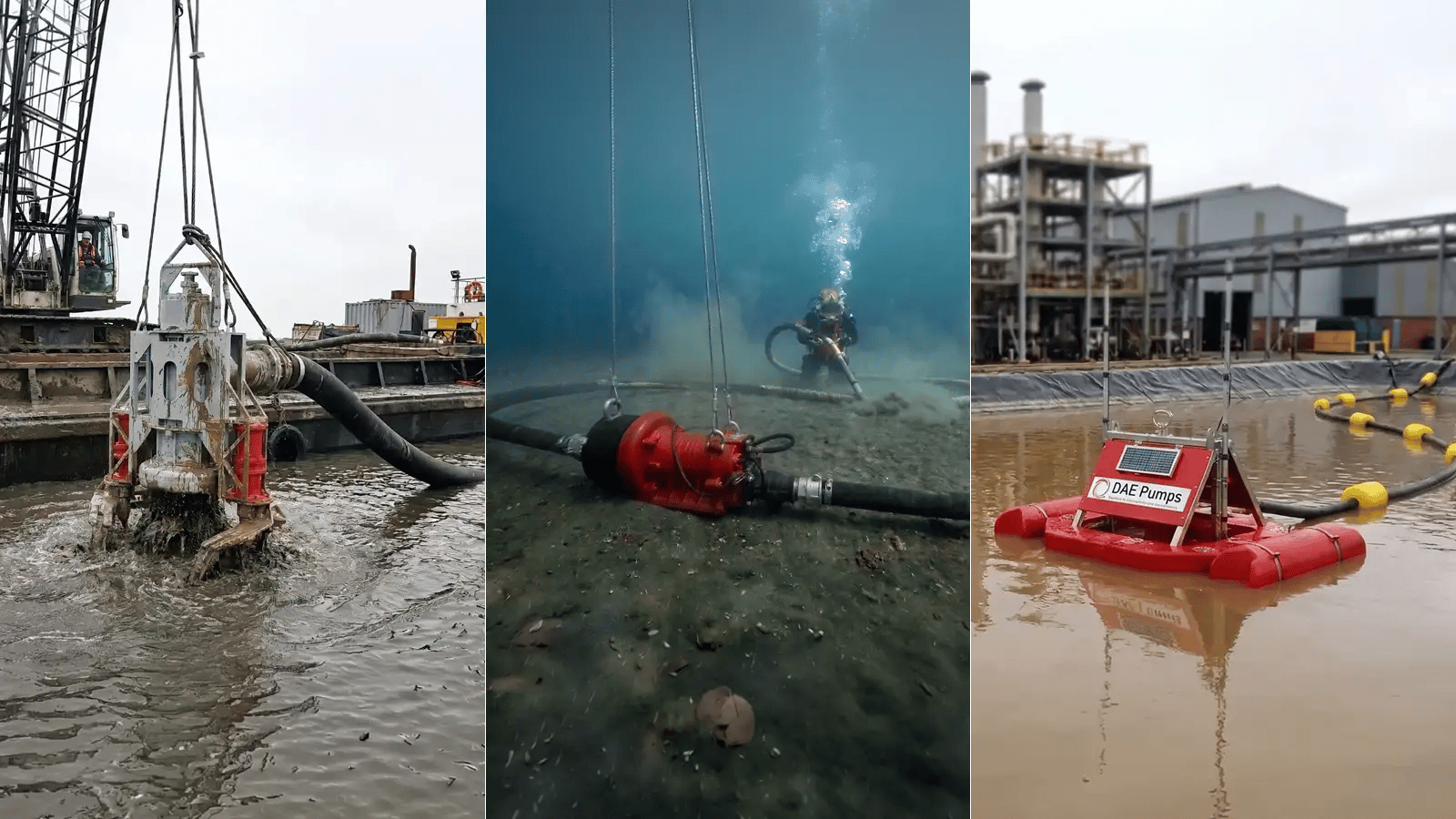 When efficiency loss points to equipment limitations, DAE Pumps can review your application requirements. Important factors include material type and density, dredging depth, discharge distance, and site access conditions. The right setup depends on your specific operating environment.
DAE Pumps offers cable-deployed, excavator-mounted, pontoon, and diver-operated dredge configurations. Each system can be configured hydraulically, electrically, or diesel-driven to match your project needs. Contact our team to discuss your efficiency challenges and determine whether equipment adjustments or upgrades can help.
FAQs About How to Diagnose Dredge Pump Efficiency Loss
How do I know if my dredge pump is cavitating?
Watch for sudden discharge pressure drops, a popcorn-popping sound, and violent vibration. Vacuum readings near 25 inches of mercury indicate cavitation is likely occurring. DAE Pumps recommends lowering operating vacuum immediately if these symptoms appear.
What vacuum level causes cavitation in dredge pumps?
Cavitation typically begins when suction vacuum reaches approximately 25 inches of mercury. Your specific threshold depends on pump design, operating elevation, and NPSHR. Check your pump curve documentation for exact specifications. DAE Pumps engineering support can help interpret these values for your application.
Can air leaks cause efficiency loss without losing prime?
Yes. Small air leaks reduce pumping capacity significantly before causing complete loss of prime. Even minor air infiltration at fittings or packing glands consumes vacuum that should be lifting material. DAE Pumps submersible configurations eliminate many air leak concerns by operating directly in the material.
How often should I inspect dredge pump impellers?
Inspect impellers weekly when pumping abrasive materials like sand and gravel. Measure blade thickness regularly and replace impellers when wear exceeds 10 percent. More frequent inspection is recommended during high-production periods or when handling particularly abrasive sediment.
What causes fish-scale wear patterns on impeller vanes?
Fish-scale wear patterns on the backside of impeller vanes specifically indicate cavitation damage. This pattern develops as collapsing vapor bubbles erode metal surfaces repeatedly. Addressing the root cause of cavitation prevents further damage after impeller replacement.
Does sediment density affect pump efficiency?
Yes. Dense sediment requires more vacuum to lift, reducing the effective vacuum available for production. When material density exceeds design parameters, flow rates drop. DAE Pumps can review your material characteristics and recommend appropriate equipment configurations for high-density applications.
How does operating elevation affect dredge pump performance?
Higher elevations reduce available atmospheric pressure, decreasing effective vacuum. Pumps operating at elevation have less vacuum capacity for lifting solids compared to sea level operation. DAE Pumps accounts for elevation in custom pump curve calculations to ensure proper sizing.