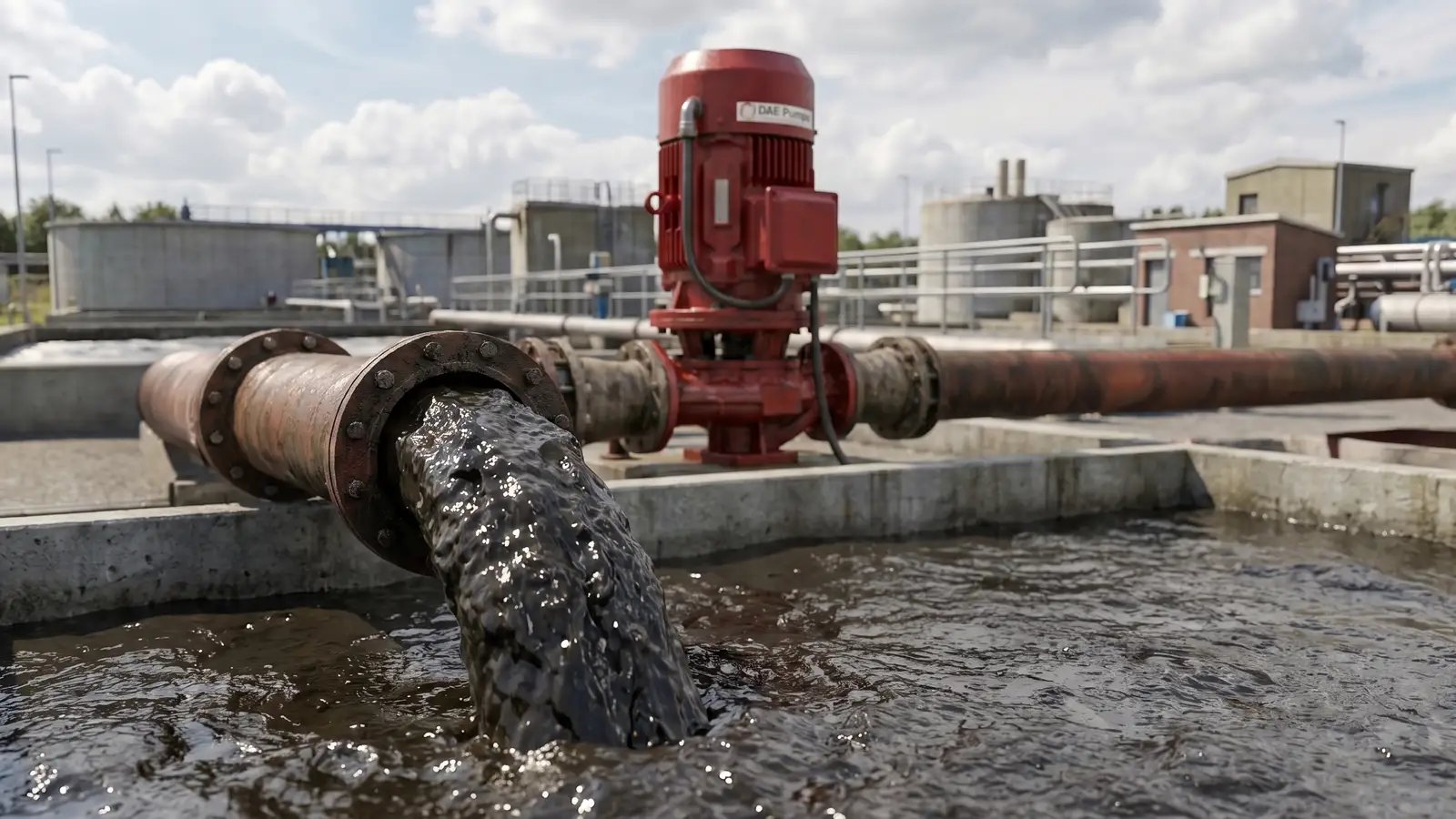
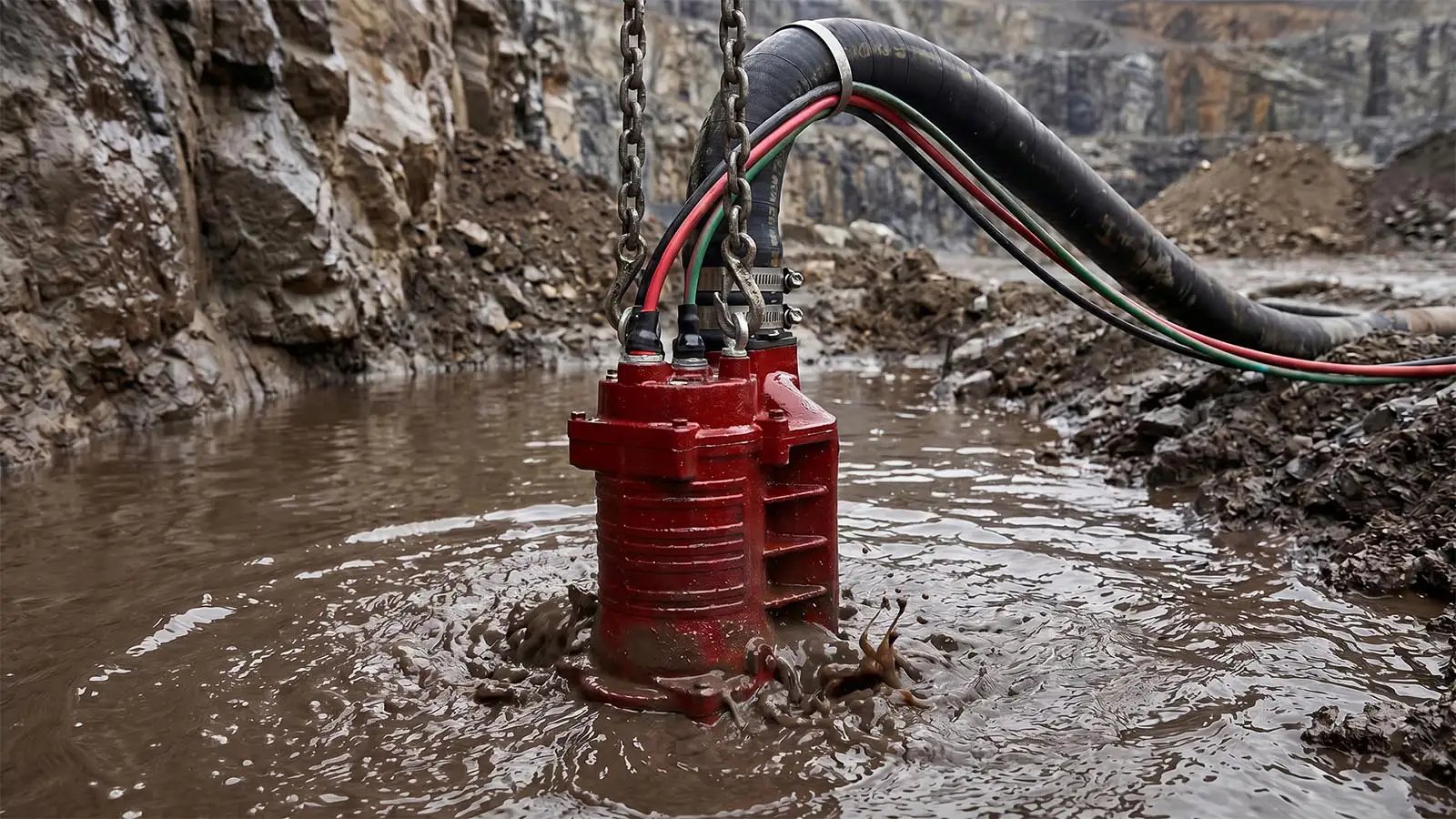
Sizing a submersible slurry pump is not the same as sizing a clean-water pump. A clean-water pump can be selected mainly around flow and head. A slurry pump has to be matched to the material as well: solids concentration, particle size, abrasiveness, slurry density, settling behavior, discharge distance, and how the pump will actually sit in the sump, pit, pond, or dredging area.

When those inputs are wrong, the symptoms show up fast. The pump may move water but leave solids behind. The discharge line may plug. Wear parts may erode faster than expected. The motor may run outside the intended load range. The operator may keep adjusting speed, hose position, or pump placement without ever solving the real sizing problem.
This guide explains how to size a submersible slurry pump for mining, dredging, construction dewatering, wastewater sludge, and industrial solids handling. The goal is to help buyers and maintenance teams understand what data matters before asking for a quote, so the selected pump fits the duty instead of becoming the next bottleneck.
Quick Answer: How Do You Size a Submersible Slurry Pump?
To size a submersible slurry pump, start with the required flow rate, calculate total dynamic head, characterize the slurry, confirm the largest solids and settling behavior, select the right pump size and materials, and verify the duty point on the pump curve. For slurry service, water-based calculations are only a starting point because solids increase friction, power demand, wear, and pipeline settling risk.
Key Takeaways
- Flow, TDH, and slurry characteristics are the core sizing inputs. Flow tells you how much slurry must move, TDH tells you how much resistance the system creates, and slurry data tells you how hard the mixture is to pump.
- Do not size slurry like water. Solids concentration, density, viscosity, and particle behavior can change head loss, power draw, and pump efficiency.
- Submersible placement helps with priming, but it does not eliminate sizing risk. Inlet blockage, poor sump design, air entrainment, low liquid level, and settled solids can still reduce performance.
- Agitation matters when solids settle. An agitator-equipped pump can resuspend material at the intake so the pump moves solids, not just the water above them.
- The correct DAE path may be submersible, flooded suction, self-priming, or lobe. The best pump depends on whether the job is a sump, pond, clarifier, hopper, bypass, or high-viscosity sludge application.
Why Proper Sizing Matters for Submersible Slurry Pumps
A submersible slurry pump sits directly in the fluid it is pumping, which makes it useful for pits, sumps, ponds, basins, dredging areas, and temporary dewatering jobs. Because the pump is submerged, it does not need to pull liquid up through a long suction lift in the same way a surface-mounted pump does. That helps with priming and suction reliability.
But the pump still has to be sized for the real material. Slurry adds weight, friction, abrasion, and settling risk. If the pump is too small, it may not maintain enough flow to keep solids moving through the pipe. If it is too large, it may run away from its intended operating range, waste energy, and create unnecessary velocity and wear. If the wrong impeller, agitator, or material package is selected, the pump may move liquid but fail to move the solids that are causing the problem.
Good sizing turns a difficult solids-handling problem into a predictable operating system. The pump runs closer to its intended range, wear is easier to forecast, and maintenance becomes planned rather than reactive.
The Five Inputs That Drive Submersible Slurry Pump Sizing
|
Sizing Input |
Why It Matters |
What to Collect Before Quote |
|
1. Required flow rate |
How much slurry must move per minute or hour. |
Target GPM or m3/hr, production target, batch transfer time, or dewatering rate. |
|
2. Total dynamic head |
How much resistance the pump must overcome. |
Static lift, discharge distance, pipe diameter, fittings, valves, hose layout, elevation change. |
|
3. Slurry properties |
How the material behaves inside the pump and pipeline. |
Specific gravity, solids by weight/volume, viscosity, temperature, pH, particle size, particle shape. |
|
4. Solids behavior |
Whether material stays suspended or settles. |
Settling rate, largest solids, abrasive grit, clay/fines, fibrous material, rocks, sand, sludge. |
|
5. Operating environment |
How the pump will be installed and maintained. |
Sump depth, pond liner, water level, access, power source, duty cycle, controls, available crane or excavator support. |
Step 1: Define the Job Before You Pick a Pump
Start with the application, not the catalog. A submersible slurry pump used for construction dewatering does not face the same duty as a pump used for mine sump solids, tailings, thick sludge, dredging, or sediment removal from a process pond.
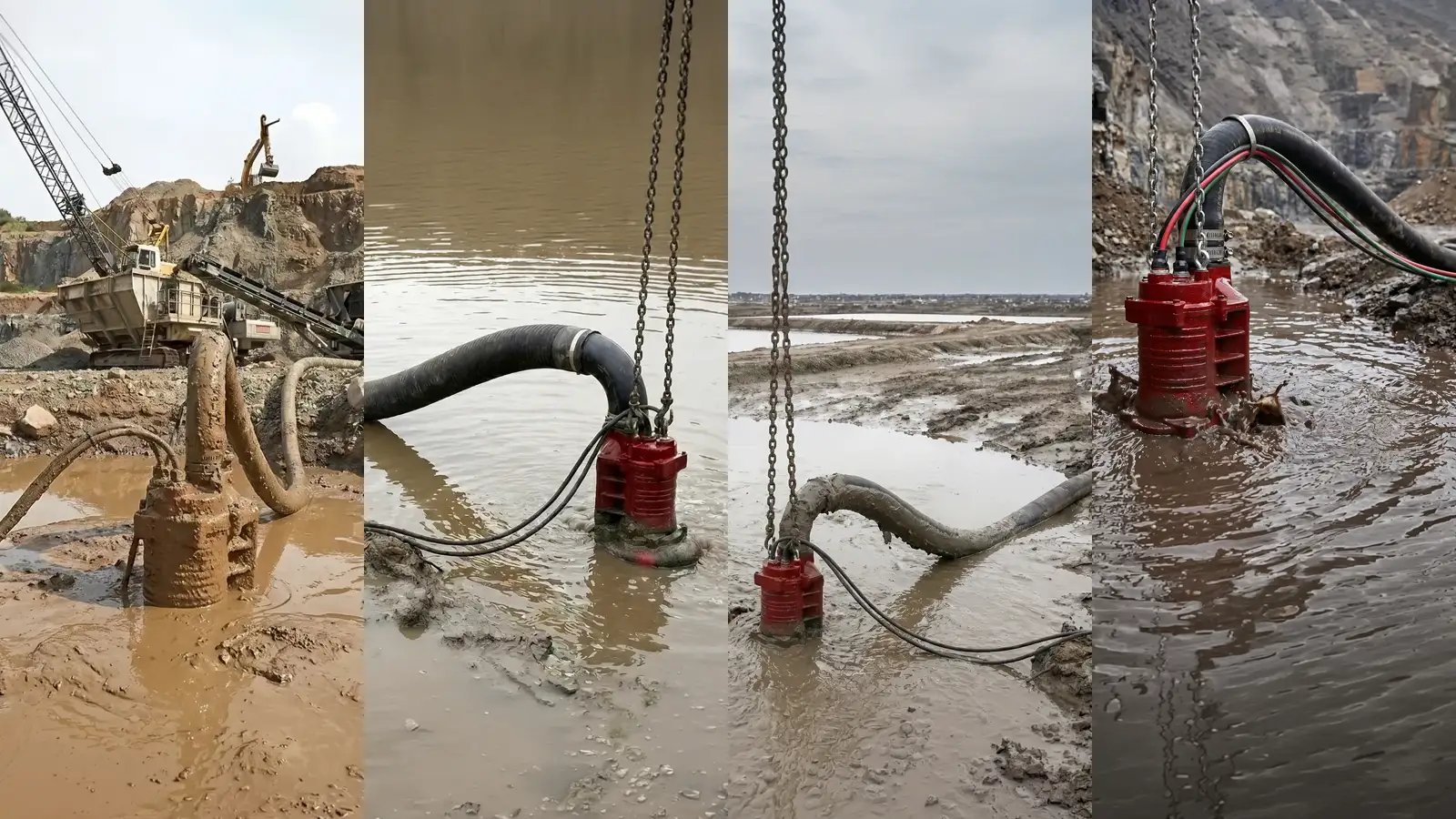 The first question is what the pump is supposed to accomplish. Is the goal to remove water fast, remove settled solids, keep a sump from building sediment, transfer sludge between treatment stages, or pump dredged material to a dewatering area? Each duty changes the sizing conversation.
|
Application |
Typical Material |
Sizing Priorities |
|
Construction dewatering |
Water with sand, silt, mud, and debris from excavations or tunnels. |
Flow rate, portability, motor protection, solids passage, abrasion resistance. |
|
Mining sump dewatering |
Sediment-laden water, abrasive fines, sand, rock, and variable inflow. |
Wear materials, agitator need, available power, discharge distance, duty cycle. |
|
Dredging and sediment removal |
Settled solids that must be resuspended before pumping. |
Agitation, solids size, pipeline velocity, discharge length, pond or basin access. |
|
Wastewater sludge transfer |
Sludge, grit, rags, biosolids, or thickened material. |
Viscosity, clogging risk, impeller style, whether a lobe or flooded suction pump fits better. |
|
Industrial process slurry |
Abrasive or chemically aggressive slurry with changing solids loading. |
Material compatibility, pH, temperature, wear package, controls, spares. |
Step 2: Calculate the Required Flow Rate
Flow rate is the volume of slurry the pump must move in a given amount of time. For continuous operations, this may be based on inflow or process demand. For batch transfer, it may be based on how quickly a sump, tank, pit, or pond zone must be cleared. For dredging, it may be tied to production goals and allowable discharge capacity.
In slurry service, flow rate also affects whether solids stay suspended. Too little velocity can allow sand, grit, or heavy particles to settle in the discharge line. Too much velocity can accelerate wear in hoses, pipe bends, elbows, and the pump wet end. The right flow rate is not simply the highest number available. It is the flow that moves the material reliably without creating unnecessary wear or power demand.
- What volume of slurry must be moved per hour or per shift?
- Is the pump moving mostly water with solids, or dense slurry with heavy solids loading?
- Does the pipeline need a minimum velocity to keep solids suspended?
- Will flow demand stay constant, or will it change during the day?
- Will the pump operate continuously, intermittently, or only during maintenance windows?
Step 3: Calculate Total Dynamic Head, Then Adjust for Slurry
Total Dynamic Head, or TDH, is the resistance the pump must overcome to move slurry from the source to the discharge point. TDH includes vertical lift, friction losses in pipe or hose, losses through fittings and valves, and the discharge pressure needed at the end of the line.
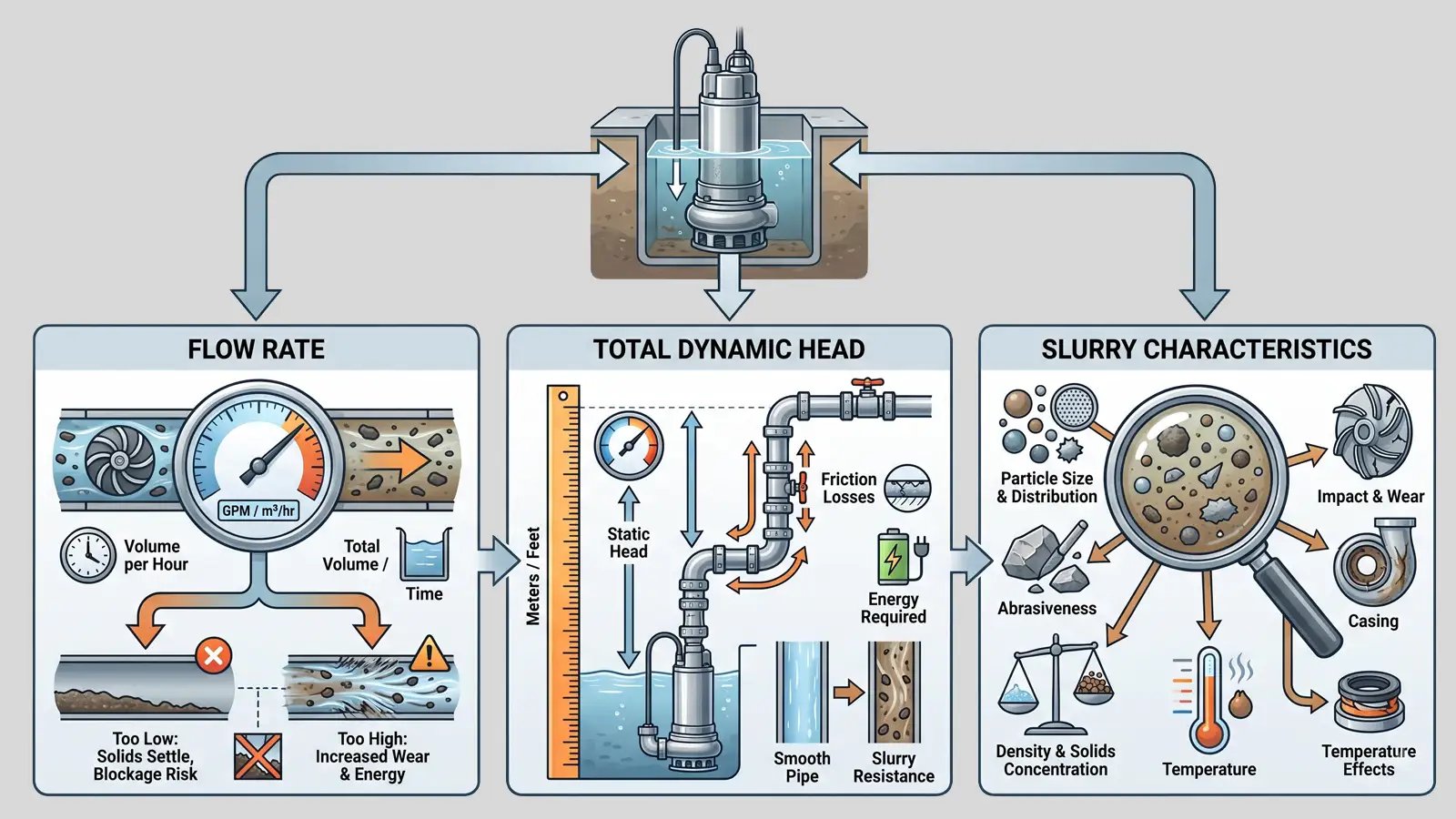 For clean water, TDH can often be calculated from static head and pipe friction. For slurry, the calculation needs more care. Solids increase mixture density and friction. Fines, clay, sand, grit, and larger particles can all change the way the material moves. A system that looks acceptable on a water curve may underperform once the actual slurry is introduced.
Clean-water TDH is the starting point. Slurry correction is what makes the selection realistic.
|
Sizing Mistake |
What Happens |
Better Approach |
|
Using only vertical lift |
Pump cannot reach expected flow even though elevation was calculated correctly. |
Add friction losses for full pipe length, hose, fittings, bends, valves, and discharge conditions. |
|
Ignoring slurry density |
Motor load rises and production drops once solids increase. |
Include slurry specific gravity and solids concentration in the application review. |
|
Ignoring pipeline settling |
Line plugs during operation or after shutdown. |
Confirm minimum transport velocity and flush procedures. |
|
Forgetting discharge distance |
Pump works at short test distance but not on the real site. |
Size using actual hose/pipe length and elevation profile. |
|
Assuming water curve performance |
Selected pump misses duty point in real slurry. |
Apply slurry derating/correction and confirm with DAE Pumps engineering. |
Step 4: Characterize the Slurry Before You Choose the Pump
The slurry is the real application. Two jobs with the same flow and head can require different pump configurations if one is moving fine sand, another is moving thick sludge, and another is moving abrasive mine tailings with rocks and clay. Accurate slurry data is what prevents a pump from being selected too lightly.
At minimum, define solids concentration, particle size, particle shape, specific gravity, viscosity, temperature, pH, and whether the material settles quickly. For abrasive service, also define the hardness and angularity of solids. Sharp sand, slag, crushed minerals, and coarse grit wear pumps differently than rounded particles or soft sludge.
|
Slurry Factor |
Why It Matters |
Data Needed |
|
Solids concentration |
Higher solids loading increases power demand, friction, and wear. |
Solids by weight and/or by volume. |
|
Particle size |
Largest particles drive solids passage and clogging risk. |
Maximum particle size and particle size distribution. |
|
Abrasiveness |
Hard, sharp particles erode impellers, wear plates, volutes, and hoses. |
Material type, hardness, angularity, grit content. |
|
Viscosity/cohesion |
Thick or sticky slurry may require different pump type or lower velocity assumptions. |
Viscosity, clay content, sludge behavior, whether material slumps or flows. |
|
Settling behavior |
Fast-settling solids may need agitation and pipeline flushing. |
Settling rate, sump geometry, shutdown procedures. |
|
Chemistry and temperature |
Corrosion and temperature affect seals, elastomers, and wet-end materials. |
pH, temperature, chemical exposure, compatibility concerns. |
Step 5: Confirm Submergence, Inlet Conditions, and Sump Geometry
Submersible slurry pumps reduce many suction-lift problems because the pump sits in the liquid. That does not mean inlet conditions can be ignored. A pump can still starve if the liquid level drops too low, if settled solids bury the intake, if the sump shape creates vortexing, or if a screen or strainer plugs with debris.
Good submersible sizing looks at where the pump will sit, how much liquid will remain around the pump during operation, whether solids settle below the intake, and how the pump will be lifted or repositioned for service. The pump has to stay wet enough for hydraulic performance and motor cooling, while also staying close enough to the solids to remove the material causing the problem.
- Confirm minimum operating water level and expected drawdown.
- Avoid placing the pump where solids bury the intake or restrict flow.
- Use the right stand, strainer, or agitator configuration for the material.
- Plan for flushing or cleaning if solids settle during shutdown.
- Confirm lifting access, power cable routing, hose routing, and safe retrieval for maintenance.
Step 6: Match the Duty Point to the Pump Curve
Once flow and corrected TDH are known, plot the duty point against the pump curve. The duty point is where the system requirement meets the pump performance. The selected pump should operate in a stable, efficient region of the curve, not at the far edge of its capability.
Operating too far from the intended range increases wear, vibration, heat, and maintenance risk. A pump operating too far left or too far right can look acceptable on paper but perform poorly in the field. Slurry service makes that risk higher because the pump is not moving a simple liquid. It is moving a mixture that changes as solids concentration, water level, and discharge conditions change.
Step 7: Select the Right Wear Materials, Impeller, and Agitator
The wet-end materials and intake design determine how long the pump will last in abrasive slurry. Standard clear-water materials may not survive sand, grit, tailings, or sludge with mineral content. For slurry duty, the pump should be built with wear-resistant components matched to the material.
Agitation is often the difference between moving water and moving solids. If solids settle in a sump or pond, the pump needs help feeding those solids into the intake. An agitator breaks up and resuspends material near the pump so the slurry entering the pump reflects the material that actually needs to be removed.
|
Feature |
Best-Fit Condition |
Selection Note |
|
High-chrome components |
Abrasive sand, grit, minerals, tailings, and settled sediment. |
Useful where sliding abrasion and erosion are major wear modes. |
|
Agitator-equipped intake |
Settled solids, sediment, dredging, mine sump cleaning, construction pits. |
Helps resuspend material so the pump does not only pull clearer water. |
|
Open stand or strainer |
Applications with debris, rocks, or varying solids conditions. |
Selection depends on whether the priority is intake access, debris control, or solids movement. |
|
Seal and motor protection |
Continuous submerged operation in abrasive service. |
Protects the motor and reduces failure risk when conditions change. |
|
Control options |
Variable flow, changing slurry density, or automated sump operation. |
Level control, thermal protection, and VFD review can reduce operator intervention. |
Step 8: Confirm Whether a Submersible Slurry Pump Is the Right Product Path
A submersible slurry pump is often the right answer for sumps, pits, ponds, basins, dredging areas, and temporary dewatering where the pump can sit directly in the liquid. But it is not the only path. The best recommendation depends on the installation, solids behavior, maintenance access, and whether the source can gravity-feed a pump.
This is where the customer journey matters. A buyer searching for submersible slurry pump sizing may actually need a submersible slurry pump, or they may need a flooded suction pump, self-priming pump, lobe pump, or dredge package depending on the site.
|
DAE Product Path |
When It Fits |
Common Applications |
|
Pump can sit in a sump, pit, pond, or basin and the job requires abrasive solids handling. |
Mining sump dewatering, construction dewatering, dredging, sediment removal, industrial slurry. |
|
|
General wastewater, sludge, drainage, or dewatering with less severe slurry conditions. |
Plant pumping, sumps, basins, water with sediment or sludge. |
|
|
A tank, hopper, or wet well can gravity-feed the pump, and surface maintenance access is preferred. |
Sludge transfer, process slurry, continuous plant duty. |
|
|
The pump must stay above the liquid or be trailer/skid mounted for portable bypass or dewatering. |
Temporary pumping, remote areas, surface access, sewage or wastewater bypass. |
|
|
Thick sludge, viscous fluids, low-shear handling, or positive displacement behavior is required. |
Thickened sludge, DAF, viscous process fluids, industrial transfer. |
|
|
Dredge or agitator system |
The job is not just pumping slurry but removing settled solids from a pond, lagoon, canal, or basin. |
Dredging, sediment removal, pond cleanout, mining process water management. |
How DAE Pumps Supports Submersible Slurry Pump Sizing
DAE Pumps offers submersible slurry pump options for abrasive solids, sand, sludge, and dewatering applications. The current DAE product structure includes 3-inch, 4-inch, 6-inch, and 8-inch submersible pump paths, with Tampa and Lansing Series options for slurry and sand pumping. DAE product pages position these pumps around rugged construction, high-chrome wet-end components, agitator options, and non-clog performance for challenging solids.
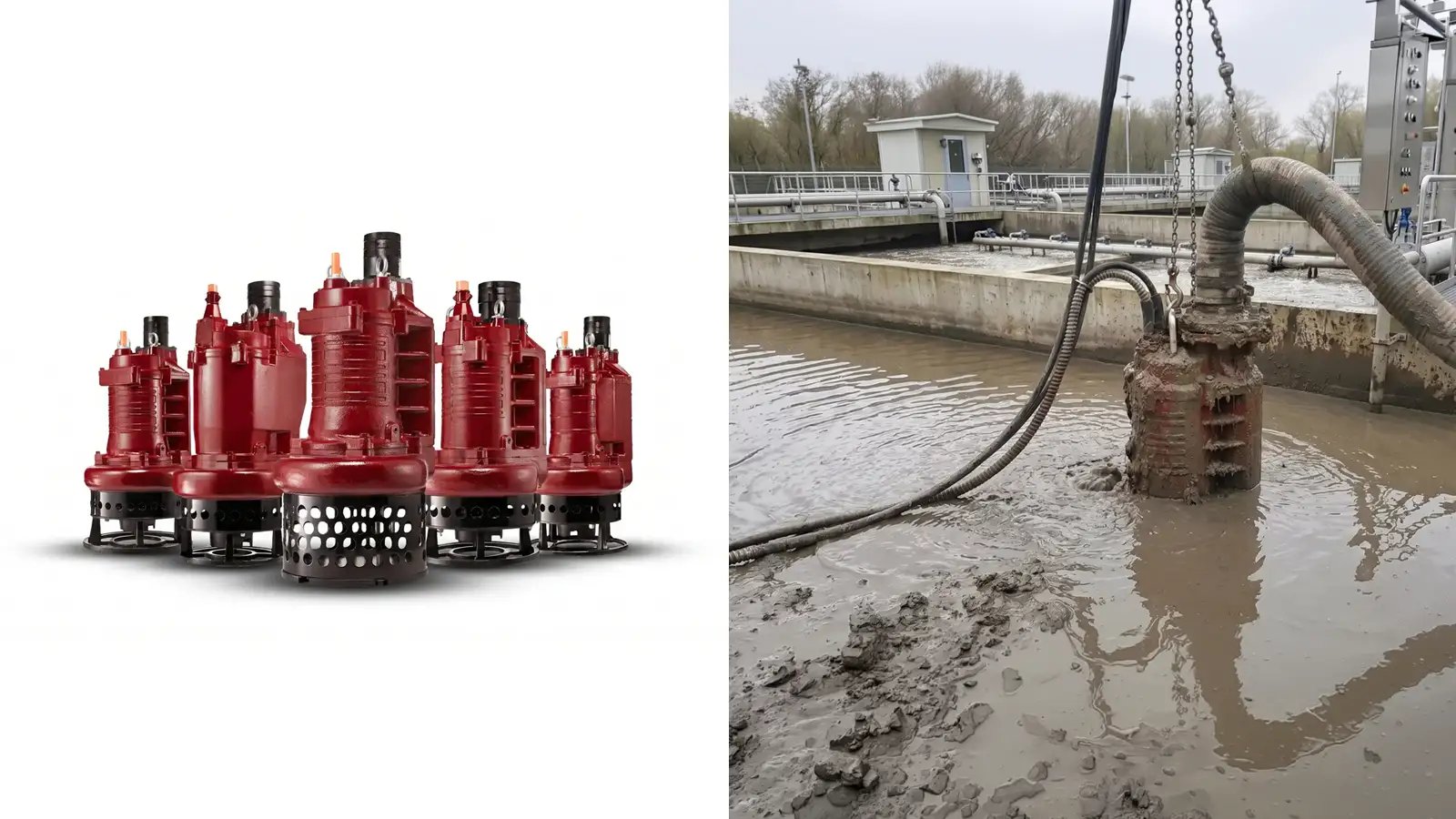
For sizing, that product range matters because the application may call for a smaller portable unit, a higher-flow 6-inch or 8-inch submersible slurry pump, or a different pump type entirely. The right DAE recommendation should be based on the real duty point, slurry data, solids passage, discharge distance, power availability, and access constraints.
Explore the DAE Submersible Slurry Pumps: Tampa Series Submersible Slurry Pumps | Lansing Series Submersible Slurry Pumps | Request Quote
Common Sizing Mistakes That Lead to Pump Problems
- Treating slurry as clean water. Water-based flow and head calculations miss the impact of density, solids, viscosity, and particle settling.
- Selecting by discharge size only. A 4-inch, 6-inch, or 8-inch discharge does not automatically mean the pump fits the slurry, head, or duty cycle.
- Ignoring the discharge line. Pipe diameter, hose length, fittings, bends, and elevation can make or break slurry performance.
- Assuming more flow is always better. Excessive velocity can increase wear and power use, while too little velocity can allow solids to settle.
- Skipping material data. Without particle size, SG, solids loading, viscosity, and abrasiveness, the pump selection is mostly guesswork.
- Choosing submersible when another configuration fits betterIf the source can gravity feed a surface pump, a flooded suction pump may provide easier maintenance access. If the slurry is very viscous, a lobe pump may need review.
What to Send DAE Pumps for an Accurate Pump Recommendation
The fastest way to size the right pump is to give engineering the inputs that define the duty. The more complete the data, the fewer assumptions are needed, and the closer the recommendation will be to real field conditions.
- Application: mining, dredging, wastewater, construction dewatering, industrial process, or other.
- Required flow rate and desired production rate.
- Static lift, total discharge distance, pipe or hose diameter, fittings, bends, and elevation changes.
- Slurry density/specific gravity, solids by weight or volume, viscosity, pH, and temperature.
- Largest solids, particle size distribution, abrasive material type, and whether fibers/rags are present.
- Whether solids are settled, suspended, compacted, or variable during the shift.
- Sump, pit, tank, pond, or basin depth and minimum operating liquid level.
- Power source, voltage, phase, hydraulic power availability, controls, and whether VFD control is desired.
- Access constraints, lifting equipment, hose routing, and required maintenance approach.
- Target duty cycle: continuous, intermittent, seasonal, bypass, or emergency use.
Frequently Asked Questions
How do you size a submersible slurry pump?
Size a submersible slurry pump by defining the required flow rate, calculating total dynamic head, characterizing the slurry, confirming solids size and settling behavior, selecting the right wet-end materials and agitator, and checking the duty point on the pump curve. In slurry service, clean-water calculations should be corrected for solids, density, viscosity, and friction behavior.
What is the most important input for slurry pump sizing?
No single input is enough. Flow rate, TDH, slurry characteristics, solids behavior, and installation conditions all work together. A pump can have the right flow rating but still fail if the slurry is too abrasive, the discharge line is too long, or the solids settle in the pipeline.
Can I use water-based TDH for slurry pump selection?
Water-based TDH is only the starting point. Slurry adds resistance, density, wear, and settling risk. A slurry application should be reviewed with correction factors or engineering input before final pump selection.
Why does an agitator matter on a submersible slurry pump?
An agitator helps resuspend settled solids near the pump intake. Without agitation, the pump may draw the water above the solids and leave sediment behind. Agitation is especially important in mining sumps, dredging, construction pits, and basins where solids settle between cycles.
What happens if a submersible slurry pump is oversized?
An oversized pump may run outside its efficient operating range, waste energy, increase velocity-related wear, and create unstable flow. The better approach is to match the pump to the actual duty point and leave the correct engineering margin instead of oversizing by default.
What happens if a submersible slurry pump is undersized?
An undersized pump may fail to meet flow or head requirements, allow solids to settle in the discharge line, overwork the motor, and increase downtime. Undersizing is common when slurry is treated like clean water during the sizing step.
When should I choose flooded suction instead of submersible?
Consider a flooded suction pump when the source can gravity-feed the pump and maintenance access from a dry location is important. Flooded suction pumps are often useful for tanks, hoppers, and plant-based slurry transfer where the pump does not need to sit inside the liquid.
When should I consider a lobe pump instead of a centrifugal slurry pump?
A lobe pump may be worth reviewing when the material is thick, viscous, sludge-like, or needs positive displacement behavior. For some wastewater and industrial sludge applications, a lobe pump can be a better fit than a centrifugal submersible slurry pump.
What DAE Pumps models should I review for submersible slurry applications?
Start with DAE Pumps submersible slurry pumps and review the Tampa and Lansing Series. The right model depends on discharge size, flow, head, solids, agitator need, power, and operating environment.
What information should I provide when requesting a quote?
Send flow rate, TDH, discharge distance, pipe size, elevation change, slurry density, solids concentration, particle size, abrasiveness, viscosity, pH, temperature, power availability, sump depth, and duty cycle. This helps DAE Pumps recommend the right configuration faster.
Get a Submersible Slurry Pump Recommendation
The right submersible slurry pump is the one matched to your real duty point, not the one selected from a catalog flow number alone. Flow rate, TDH, solids concentration, particle size, abrasiveness, viscosity, discharge distance, and operating environment all affect the final recommendation.
DAE Pumps can review your application and help determine whether the best path is a Tampa or Lansing submersible slurry pump, another submersible pump configuration, a flooded suction pump, a self-priming pump, a lobe pump, or a broader dredging system.
Ready to size the pump correctly? Send DAE Pumps your slurry data, flow requirement, head conditions, and site details to request an application review or quote. Request a quote from DAE Pumps.