Businesses purchasing pumps, generators or dredging equipment in 2026 may be able to use Section 179 to expense qualifying equipment in the year it is placed in service. The equipment must meet the federal requirements, be used predominantly for business and be ready and available for its intended job during the tax year. A tax benefit can improve the economics of a necessary equipment purchase, but it should never replace proper pump selection.
Key 2026 Section 179 Numbers
- Maximum federal deduction: $2,560,000
- Phaseout begins when qualifying property exceeds: $4,090,000 of qualifying property
- Full phaseout at: $6,650,000
- Business-use requirement: more than 50%
- Controlling timing rule: ready and available for intended use
Before acting, confirm four things with a tax professional: the equipment is being acquired by purchase for qualified business use, business use will exceed 50%, the equipment will be ready and available within the applicable tax year, and federal limits plus state treatment have been reviewed.
Start With the Job, Not the Deduction
A year-end deduction is valuable only when the equipment solves the correct operating problem.
A drainage pump selected for relatively clear water is not automatically suitable for abrasive slurry. A self-priming surface pump and a submersible pump may both move liquid, but their installation, suction conditions, solids capability, power requirements and maintenance needs are different. Dredging equipment must also be matched to the material, depth, deployment method and discharge system.
Begin with the application:
- What material needs to be moved?
- Is the job dewatering, slurry transfer or dredging?
- What flow rate and total dynamic head are required?
- What solids and particle sizes are present?
- Is electric, hydraulic or engine-driven power available?
- Will the equipment operate submerged, on the surface or from an excavator?
- Is the need recurring enough to support ownership?
Those answers determine the equipment. Tax planning comes after application fit.
What Types of DAE Equipment May Potentially Qualify?
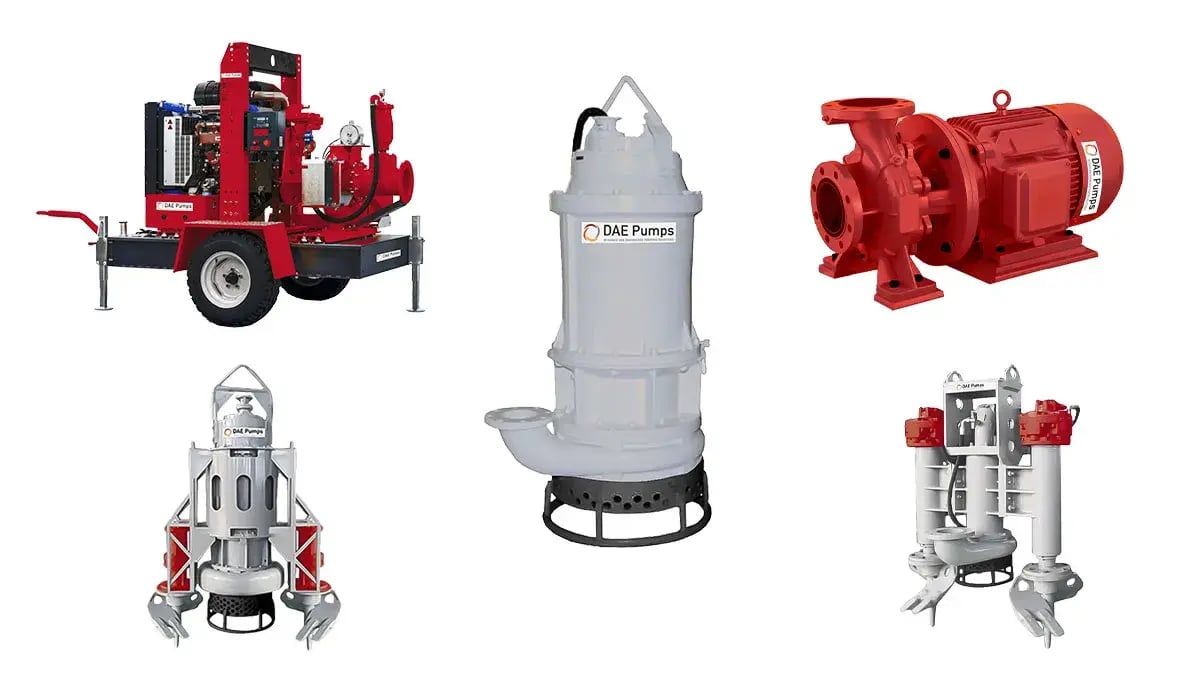
IRS guidance identifies machinery and equipment as common forms of tangible personal property that may qualify for Section 179. Depending on the customer, transaction and use, potentially eligible DAE purchases may include:
- Submersible drainage and dewatering pumps
- Submersible slurry and sand pumps
- Self-priming surface pumps
- Flooded-suction pump packages
- Cable-deployed and excavator-mounted dredge pumps
- Dredging systems and related power packages
- Industrial generators purchased for business operations
- Controls, accessories and components capitalized as part of a qualifying equipment system
- Certain new or used equipment acquired by purchase
This is not a determination that every DAE product or accessory qualifies. A tax professional must evaluate the particular asset, acquisition and business use.
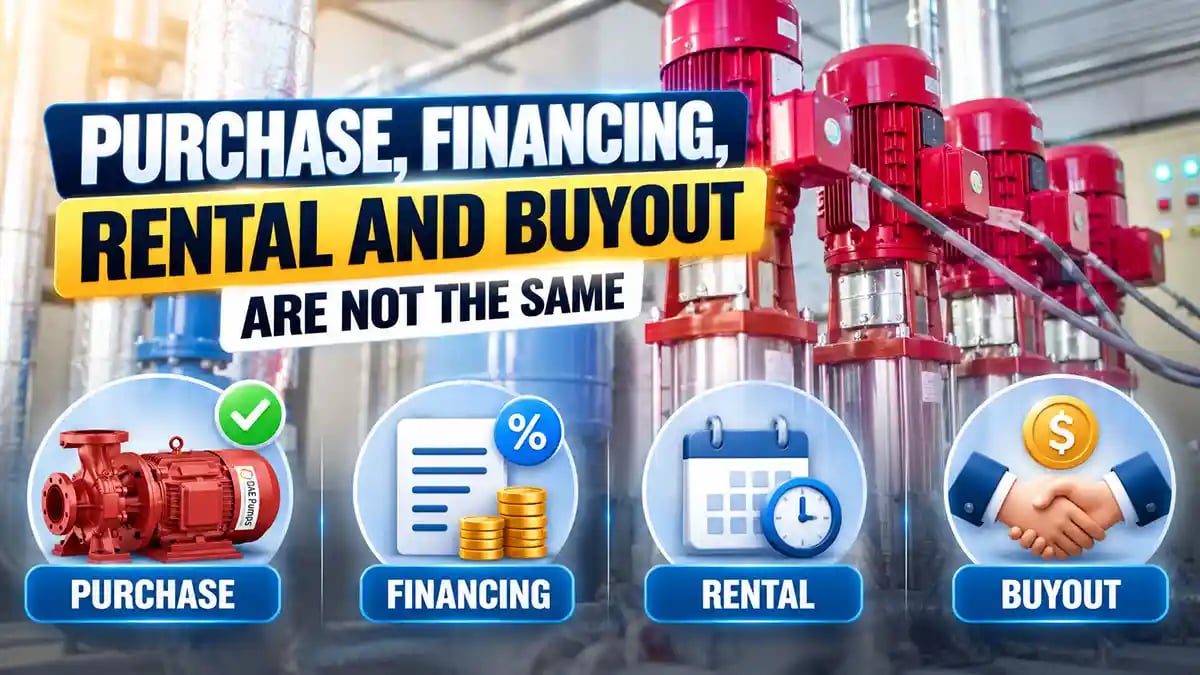
Purchase, Financing, Rental and Buyout Are Not the Same
Customers often compare several ways to secure equipment. The operational result may look similar—a pump arrives at the site—but the accounting and tax treatment can be very different.
Direct purchase
A qualifying equipment purchase may be eligible for Section 179 when the buyer owns the equipment and satisfies the other requirements.
Financed purchase
Financing may still permit Section 179 treatment when the transaction is treated as a purchase and the customer is the tax owner. The deduction is not necessarily limited to the cash paid during the year, but eligibility depends on the financing documents and tax facts.
Rental
A standard rental generally does not give the renter a purchased depreciable asset. Rental payments may instead be treated as operating expenses, subject to the business’s circumstances. Rental remains useful for temporary projects, emergencies and applications that do not justify ownership.
Purchase or buyout after a rental
A later purchase or approved buyout option must be evaluated separately. The agreement, ownership transfer, purchase price and placed-in-service timing can affect treatment. Do not assume that prior rental payments automatically create a Section 179 deduction.
DAE Pumps can explain available purchase, rental, financing and approved buyout paths. The customer’s tax advisor must determine the treatment of the chosen structure.
What Does “Placed in Service” Mean?
Equipment is generally placed in service when it is ready and available for its specific use. Merely ordering a pump, signing a finance agreement or paying a deposit before year-end does not establish that requirement.
For a pump package, readiness may depend on more than delivery. Consider whether the equipment requires final sizing and technical approval, mounting or trailer preparation, electrical connection or generator pairing, hose/pipe/fittings/controls, installation and startup, or site access, permits and operator preparation.
If a calendar-year business wants the equipment treated as placed in service during 2026, it should plan around an operational readiness date no later than December 31, 2026. Fiscal-year businesses should confirm the deadline that applies to their own tax year.
How Section 179 and Bonus Depreciation Differ
Section 179 gives a business flexibility to elect the deduction for selected qualifying assets and amounts. It is subject to the annual limit, investment phaseout and business-income limitation.
Under current federal rules, certain qualified property acquired and placed in service after January 19, 2025 may also be eligible for a 100% additional first-year depreciation allowance. Bonus depreciation follows different rules and may be available after the basis is reduced by any Section 179 deduction.
The two provisions should be modeled together. A business may prefer Section 179, bonus depreciation, regular depreciation or a combination depending on income, projected future tax rates, state conformity and the types of assets purchased.
Five Questions to Answer Before Requesting a Year-End Quote
- What problem must the equipment solve?
- What is the required duty point (target flow and total dynamic head at the same operating point)?
- What is the complete system (suction conditions, pipeline or hose, elevation, fittings, power and controls)?
- When must the equipment be operational? Work backward from the required placed-in-service date.
- Is ownership the right commercial choice compared with rental?
A Pump-Buyer’s Documentation Checklist
Keep a complete record of:
- Final quote and purchase agreement
- Equipment description, model and serial number
- Financing or ownership documents
- Invoice and proof of payment
- Shipping and delivery records
- Installation and startup records
- Date the equipment became ready and available
- Business-use records
- Form 4562 and tax-advisor calculations
Frequently Asked Questions
Can industrial pumps qualify for Section 179?
Potentially. Pumps purchased for active business use may fall within qualifying machinery and equipment, but the specific asset and transaction must meet all Section 179 requirements.
Can a business claim Section 179 on a generator?
A generator purchased as business equipment may potentially qualify. Its use, ownership, installation and placed-in-service date should be reviewed with a tax professional.
Do submersible and self-priming pumps receive different Section 179 treatment?
The tax classification is based on the property and transaction, not simply the pump’s deployment method. Operationally, however, the two pump types serve different needs and must be selected accordingly.
Can financed DAE equipment qualify?
Possibly. A financed purchase may qualify when the customer is treated as the purchaser and tax owner. A conventional lease or rental may be treated differently.
Does used pump equipment qualify?
Certain used equipment acquired by purchase can potentially qualify, subject to related-party restrictions and the other federal requirements.
Is a December purchase automatically deductible in 2026?
No. The equipment generally must be ready and available for its intended business use during the applicable tax year. An order or deposit alone is not enough.
Should a business buy equipment only for the deduction?
No. A deduction reduces taxable income; it does not make unnecessary or incorrectly selected equipment free. The purchase should first be justified by utilization, productivity, project requirements and total cost.
Build the Equipment Plan Before the Calendar Gets Tight
If your business expects to purchase pumping, generating or dredging equipment, start with the application and the required operating date. DAE Pumps can help compare equipment, availability, purchase, rental, financing and approved buyout paths. Your tax professional can determine whether Section 179 or another depreciation method fits your situation.
Request or update an equipment quote
Tax Information Notice
DAE Pumps does not provide tax, legal or accounting advice. This article contains general federal information available as of October 20, 2026. Eligibility and tax results depend on the taxpayer, equipment, agreement, business use, taxable income, placed-in-service date and applicable state rules. Consult a qualified tax professional before making a purchase, financing or tax decision.