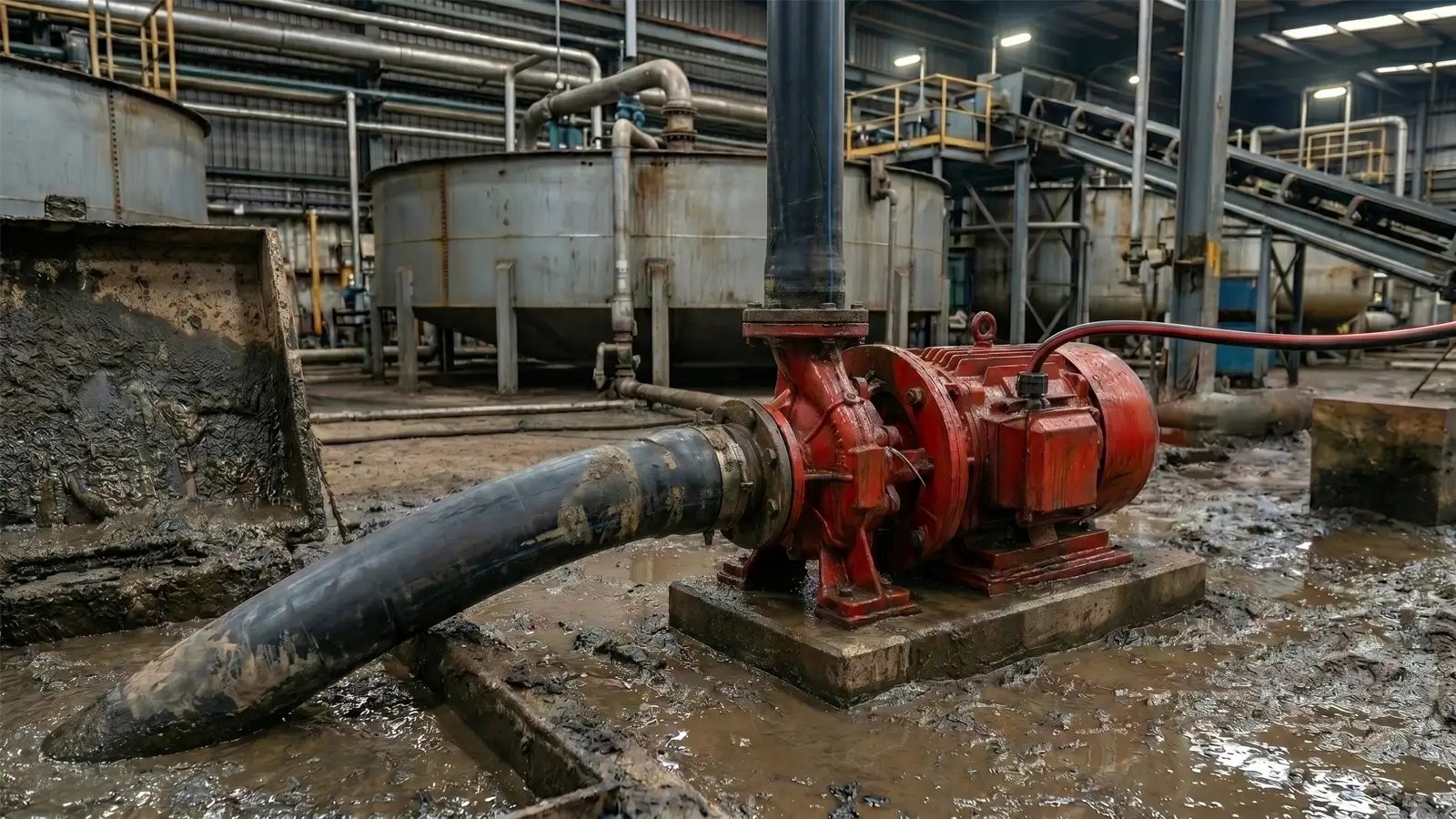
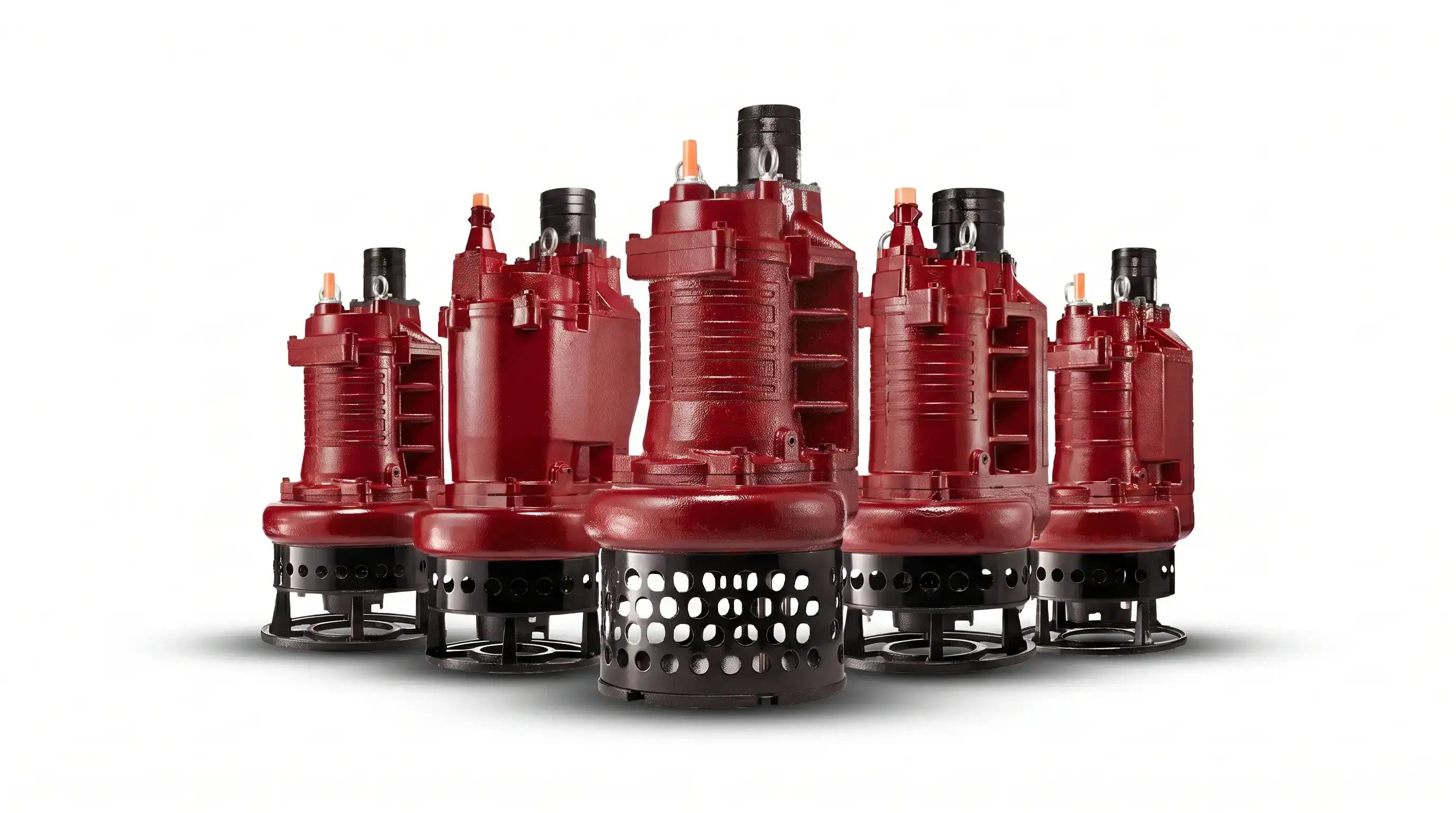
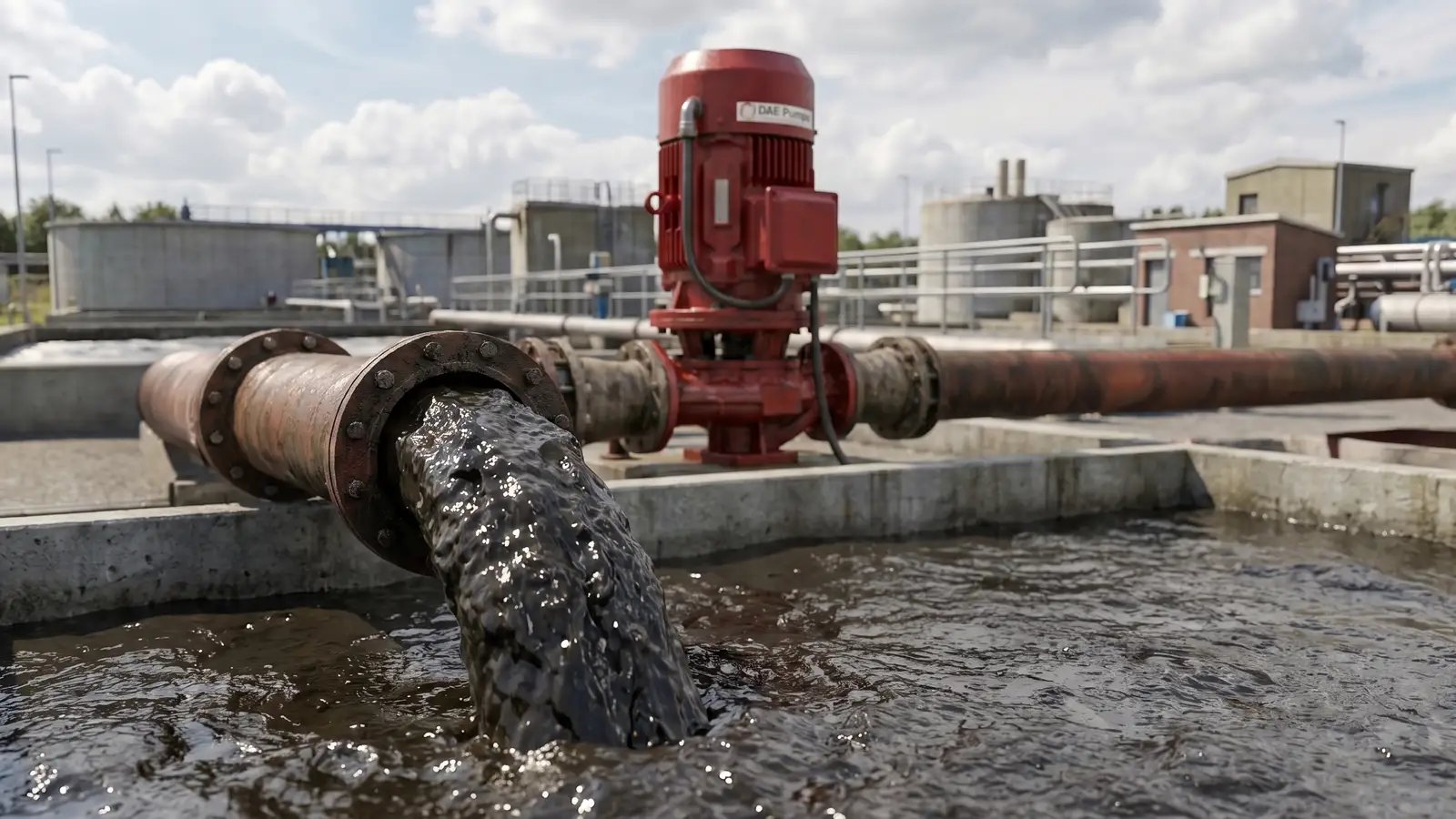
Choosing a submersible pump for municipal wastewater is not just a flow-and-head exercise. The pump has to survive the real wet well: rags, wipes, grit, grease, sand, sludge, changing inflow, long run hours, and limited service access. That is why the right selection has to look at the full application, not just a catalog flow number.
A good wastewater pump selection should answer four questions right away: What duty point does the pump need to hit? What solids does it have to pass? What materials and seal package will survive the wastewater stream? And how quickly can the plant maintain or replace the pump when something changes?

DAE Pumps provides submersible pumps, submersible slurry pumps, slurry and sludge pumps, and related pumping equipment for municipal, wastewater, dewatering, sludge, and abrasive-solids applications. This guide walks through how to select the right path before the wrong pump becomes a maintenance problem.
|
Summary To select a submersible pump for a municipal wastewater plant, start with the true duty point: required flow, total dynamic head, force-main friction, and minimum/average/peak inflow. Then match the pump to the wastewater stream: rags, wipes, grit, sludge, solids size, abrasiveness, corrosion risk, and service access. A non-clog or vortex-style submersible pump may fit raw sewage and rag-heavy lift stations, while a heavier submersible slurry or sludge pump may be needed for grit, sludge, sediment, or high-solids service. The best pump is the one that can pass the worst-case solids, run near the intended operating point, protect the motor and seals, and be serviced safely. |
Key Takeaways
- Submersible pump selection for municipal wastewater should start with the system, not the pump catalog.
- Flow, total head, solids type, ragging risk, grit load, and service access all affect the correct pump choice.
- A non-clog wastewater pump is not always the same thing as a heavy-duty slurry or sludge pump.
- Impeller style matters: channel, vortex, cutter/grinder, and slurry-style designs solve different problems.
- Seal protection, motor cooling, level controls, VFD compatibility, and guide-rail access can matter as much as pump size.
- DAE Pumps can help connect the duty point, wastewater stream, and equipment configuration before a plant commits to a pump.
Why Wastewater Pump Selection Is So Unforgiving
Municipal wastewater is difficult because it is never just water. It can carry wipes, rags, stringy material, grease, grit, sand, settled solids, and industrial discharge. Some days the pump is moving mostly liquid. Other days it may see stormwater infiltration, grit, heavy sludge, or debris that was never supposed to enter the system.
That variability is what turns a simple pump purchase into an operational decision. A pump that looks correct on a clean-water curve can still clog, trip, cavitate, or wear quickly when the actual influent is rag-heavy, abrasive, or inconsistent.
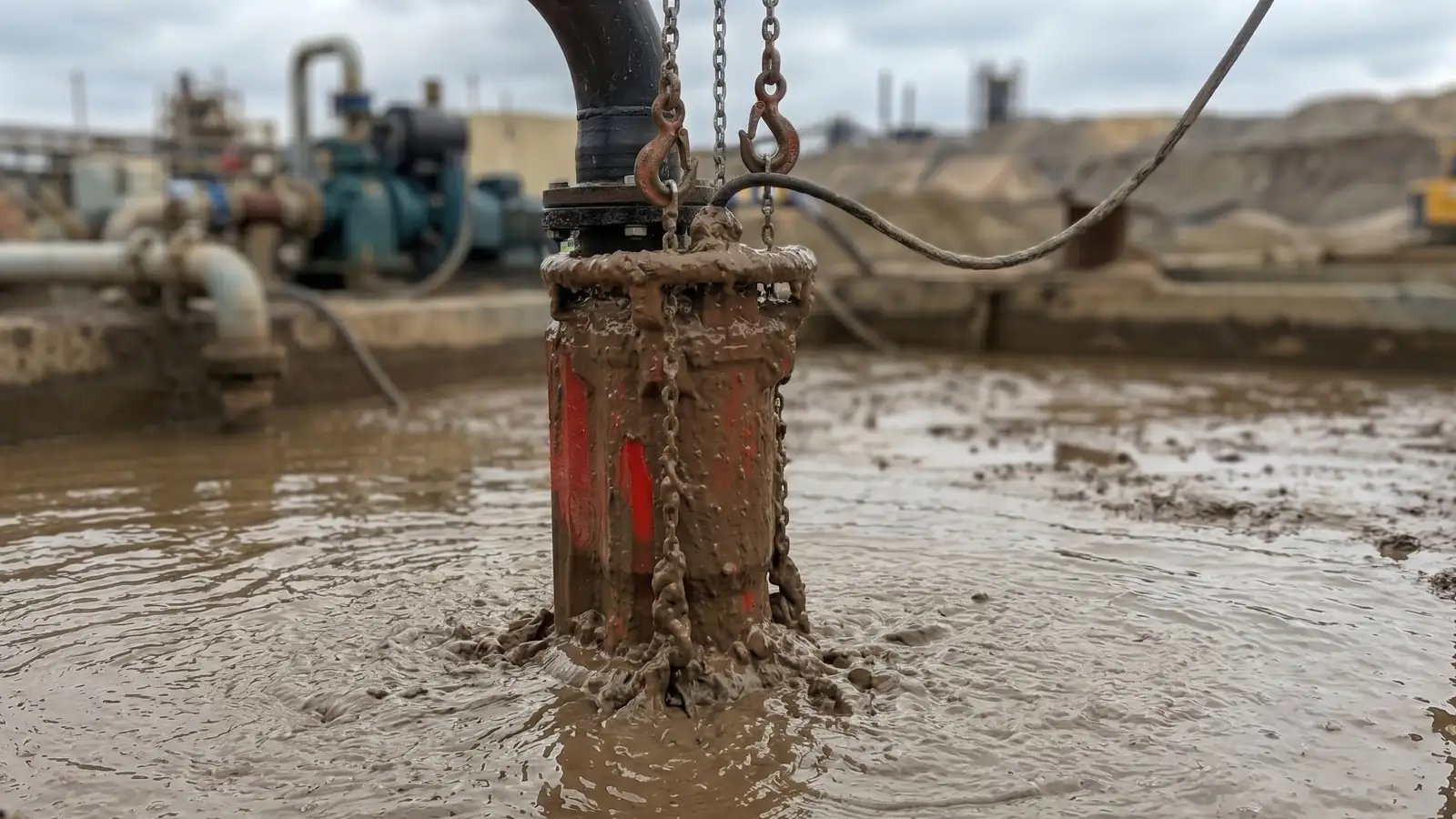 The wrong pump selection can create:
- Lift-station callouts from clogging or ragging.
- Premature seal failure from grit and abrasive solids.
- Motor overheating from poor cooling, overloading, or repeated starts.
- Excessive energy use when the pump operates far from the intended duty point.
- Confined-space maintenance risk when wet-well access is difficult.
- Compliance risk if a pump failure causes backup, bypass, or overflow conditions.
How a Submersible Wastewater Pump Works
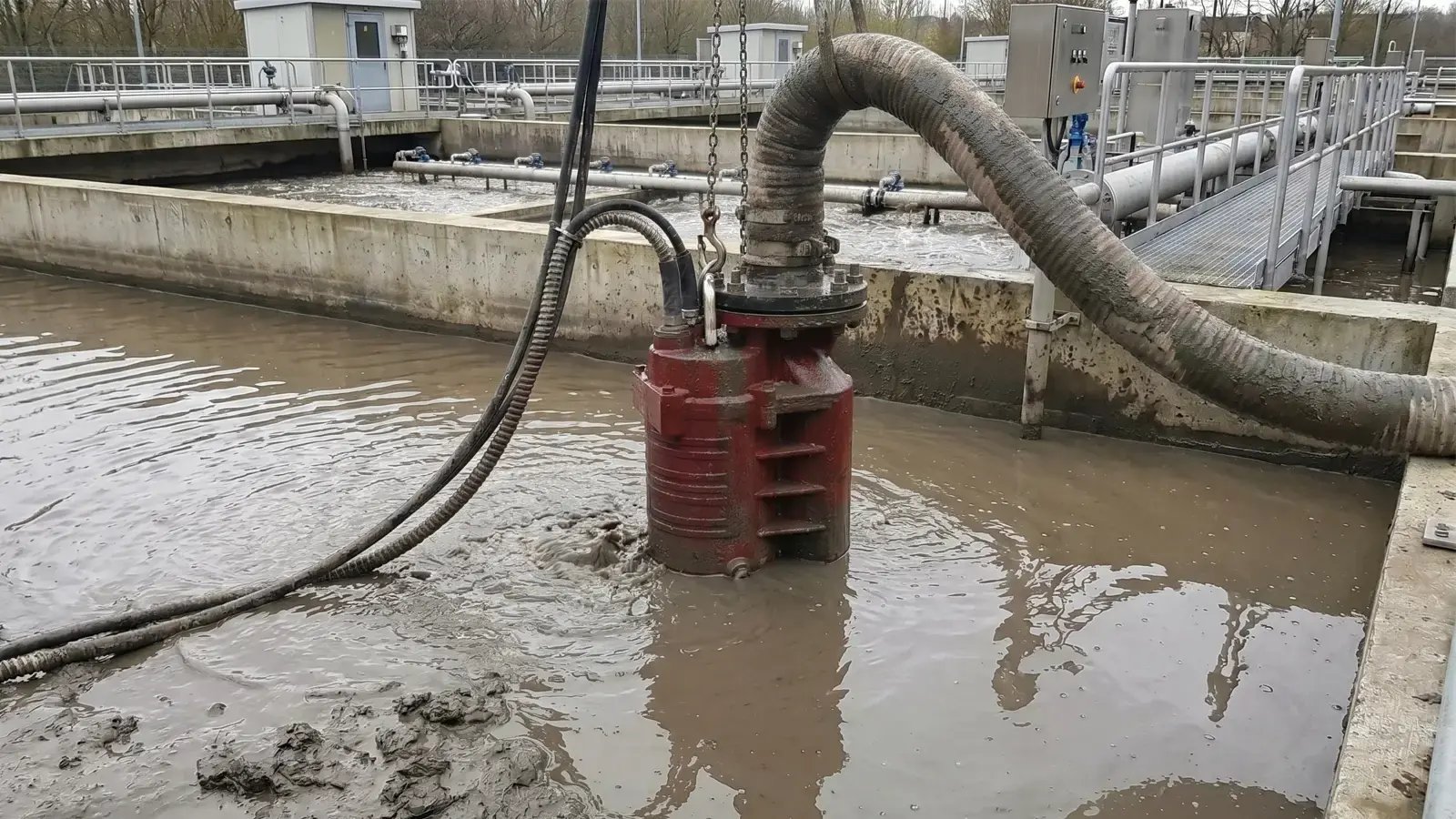
A submersible wastewater pump operates directly in the wet well or sump. Because the pump is submerged, it is naturally primed and can sit close to the source of the flow. That makes submersible pumps a strong fit for lift stations, wet wells, stormwater basins, plant sumps, and treatment areas where suction lift or dry equipment access is not ideal.
The pump still has to be selected carefully. The motor must remain sealed and cooled. The impeller must pass the solids. The discharge connection has to match the force main. The guide-rail or auto-coupling arrangement should let crews pull the pump from the surface without unnecessary wet-well entry.
The Core Components to Review
|
Component |
What to Review |
Why It Matters |
|
Pump and hydraulic end |
Flow, head, solids passage, impeller type, and efficiency at the operating point. |
This determines whether the pump actually moves the required wastewater stream. |
|
Motor and cable |
Voltage, phase, horsepower, starts per hour, thermal protection, and cable integrity. |
The motor must survive submerged duty and changing load conditions. |
|
Seal system |
Mechanical seal arrangement, seal chamber, leak detection, and abrasion resistance. |
Seal failure can quickly lead to motor damage and unplanned downtime. |
|
Impeller type |
Channel, vortex, semi-open, cutter/grinder, or slurry-style design. |
Impeller geometry determines how the pump handles rags, wipes, grit, and sludge. |
|
Guide rail / coupling |
Auto-coupling base, discharge elbow, lifting chain, and service access. |
Surface removal is central to safer and faster maintenance. |
|
Controls |
Level sensors, alarms, SCADA integration, and VFD compatibility. |
Controls help match variable inflow and provide early warning before failure. |
Step 1: Define the Real Duty Point
The first selection step is not choosing a brand, impeller, or material. It is defining the duty point. A pump must deliver the required flow against the actual total dynamic head of the system.
For a wastewater plant or lift station, that means looking at static lift, force-main length, pipe diameter, valves, fittings, and friction losses. It also means planning for minimum, average, and peak inflow rather than designing around one perfect operating point.
For variable-flow wastewater systems, a variable frequency drive may help match pump output to changing inflow, reduce hard starts, and improve control. The VFD does not fix an incorrectly selected pump, but it can help a properly selected pump operate across a wider range.
Step 2: Understand the Wastewater Stream
The solids profile often determines whether the pump succeeds. Municipal wastewater may include soft solids, rags, wipes, fibrous material, grit, sand, scum, sludge, and industrial contaminants. Each one affects the pump differently.
|
Wastewater Condition |
Selection Concern |
Pump Direction |
|
Raw sewage with wipes/rags |
Ragging and clogging around the impeller. |
Prioritize non-clog or vortex-style solids handling. |
|
Grit-heavy influent |
Abrasive wear on impeller, volute, and seals. |
Consider heavy-duty slurry/sludge pump construction and wear-resistant materials. |
|
Thick sludge or biosolids |
Higher viscosity and potential settling. |
Review sludge pump or positive-displacement/lobe options where appropriate. |
|
Stormwater infiltration |
Variable flow, sand, and sediment spikes. |
Size for peak events and consider VFD/control strategy. |
|
Corrosive industrial influent |
Material attack on wetted components. |
Review stainless, coated, or corrosion-resistant construction. |
|
Temporary bypass |
Mobility, priming, and quick installation. |
Review self-priming or dewatering/bypass options. |
Step 3: Match the Impeller to the Problem
Impeller selection is where many wastewater pump decisions succeed or fail. The best choice is usually the highest-efficiency design that can reliably pass the worst-case solids in the wet well.
|
Impeller / Pump Style |
How It Handles Solids |
Advantages |
Limitations |
Best Fit |
|
Non-clog / channel |
Uses wider passages to pass soft solids. |
Efficient for many raw sewage applications. |
Can still rag if wipes and fibrous material are severe. |
Lift stations and plant transfer where large soft solids are common. |
|
Vortex |
Recessed impeller creates flow while allowing solids to pass with less direct contact. |
Strong anti-clog option for stringy or gritty flow. |
Often lower hydraulic efficiency than channel designs. |
Rag-heavy, grit-heavy, or debris-prone wastewater. |
|
Semi-open / slurry-style |
Handles abrasive solids with more open geometry and wear-focused construction. |
Better fit for grit, sludge, sand, and sediment. |
Must be matched carefully to duty point and material. |
Grit chambers, sludge sumps, industrial wastewater, and abrasive plant areas. |
|
Cutter / grinder |
Cuts or macerates solids before pumping. |
Useful when force mains or small-diameter piping require particle reduction. |
Cutters wear and may add energy/maintenance cost. |
Pressure sewer, small-force-main, or heavy-ragging applications. |
|
Lobe / positive displacement |
Moves a fixed volume per revolution. |
Useful for thick sludge and metering-like transfer. |
Not the default for general wet-well pumping. |
Thickened sludge, biosolids transfer, and controlled-flow sludge service. |
Step 4: Choose the Right DAE Pumps Solution Path
This is where the customer journey matters. The question is not just, 'Do I need a submersible pump?' The better question is, 'Which pump configuration fits the wastewater problem I actually have?'
|
Application Need |
Best Starting Point |
Why It Fits |
DAE Pumps Path |
|
General lift station or wet-well pumping |
Submersible wastewater pump |
Always primed, compact, and serviceable from the surface with the right rail/coupling setup. |
|
|
Abrasive grit, sand, sludge, or sediment |
Submersible slurry or sludge pump |
Built for heavier solids and more abrasive service than standard wastewater transfer. |
|
|
Thick sludge or biosolids transfer |
Sludge pump or lobe pump review |
Thicker material may require a different pump class than raw sewage. |
|
|
Temporary bypass, field pumping, or surface access |
Self-priming pump |
Keeps the pump at the surface and supports portable or temporary setups. |
|
|
Tank, hopper, or gravity-fed plant transfer |
Flooded suction pump |
Uses gravity feed where a surface-mounted pump can sit below liquid level. |
|
|
Variable inflow or energy/control concerns |
VFD/control review |
Helps match pump speed to changing inflow and provides control/protection options. |
Step 5: Select Materials, Seals, and Motor Protection
Materials and seal protection are not small details in wastewater. They decide how long the pump lasts before maintenance becomes routine or urgent.
For general municipal wastewater, cast iron may be appropriate. For grit, sand, sludge, or abrasive service, the pump may need hardened or high-chrome wear components. For corrosive industrial influent, stainless or other corrosion-resistant materials may be required.
The seal package matters just as much. Continuous submerged service requires protection against water intrusion, grit, and heat. Seal-leak sensors, thermal protection, and proper cable management give operators earlier warning before a pump problem becomes a motor failure.
Step 6: Plan for Service Access Before the Pump Fails
A municipal pump is only as practical as the crew's ability to service it. A lower-cost pump that requires difficult wet-well entry, long lead-time parts, or repeated clog clearing may become more expensive than a better-designed option.
Before specifying the pump, confirm:
- Can the pump be removed from the surface using a guide-rail or auto-coupling system?
- Are replacement parts stocked or available quickly?
- Can the plant monitor seal leaks, temperature, current, flow, or run hours?
- Can the pump handle the worst-case solids without routine manual clearing?
- Does the selected configuration reduce confined-space exposure and emergency callouts?
What Information Should You Send for a Pump Recommendation?
The fastest way to get the right pump recommendation is to send real operating data. DAE Pumps can use this information to narrow the equipment path and avoid guessing.
|
Application Data |
Site and Installation Data |
|
Flow requirement: minimum, average, and peak |
Wet-well depth and dimensions |
|
Total dynamic head or system curve |
Discharge pipe size and force-main length |
|
Wastewater type: raw sewage, grit, sludge, industrial influent, stormwater, or bypass |
Voltage, phase, available power, and VFD needs |
|
Solids size, ragging/fiber level, and grit/sand load |
Rail/coupling or mounting requirements |
|
Abrasiveness, corrosiveness, pH, and temperature |
Control system, alarms, and SCADA requirements |
|
Desired duty cycle and expected run hours |
Maintenance access, lifting, and confined-space constraints |
How DAE Pumps Supports Municipal Wastewater Selection
DAE Pumps supports municipal and wastewater applications with a broad equipment path that includes submersible pumps, submersible slurry pumps, slurry pumps, self-priming pumps, flooded suction pumps, lobe pumps, and pump accessories such as VFDs.
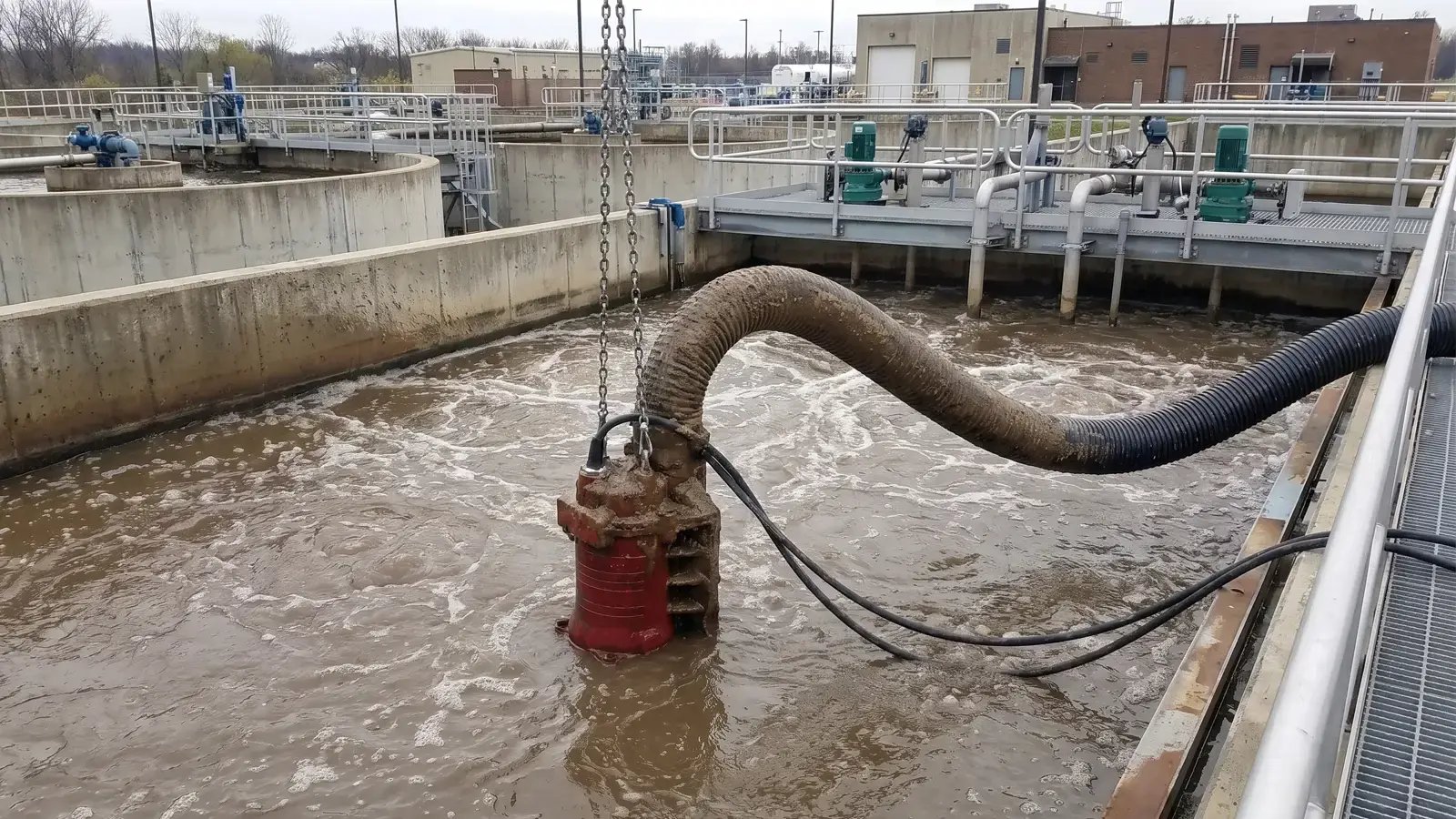
For a deeper application example, review the DAE Pumps wastewater case study, which connects wastewater pump challenges to abrasion, clogging, grit, sludge, variable flow, corrosion, and maintenance burden.
Frequently Asked Questions
How do I select a submersible pump for municipal wastewater?
Start with the duty point: required flow, total dynamic head, and force-main losses. Then review the solids profile, including rags, wipes, grit, sludge, particle size, abrasiveness, and corrosiveness. From there, select the impeller type, seal package, motor protection, materials, controls, and service access needed for the site.
What is the difference between a submersible sewage pump and a submersible slurry pump?
A sewage pump is generally selected for wastewater with soft solids, rags, and municipal influent. A submersible slurry pump is usually selected when the stream is more abrasive or solids-heavy, such as grit, sludge, sand, sediment, or industrial wastewater solids.
What impeller type is best for municipal wastewater?
It depends on the solids. Channel-style non-clog impellers may fit general raw sewage. Vortex impellers are often stronger where ragging, stringy material, or grit is the main problem. Cutter or grinder pumps may fit pressure sewer or small-force-main duty. Thick sludge may require a different pump review entirely.
Why do wastewater pumps clog?
Clogging usually comes from wipes, rags, fibrous material, grease, or oversized debris that catches on the impeller or restricts the suction/discharge path. The best prevention is selecting the correct impeller style and solids passage for the worst-case material.
Should I use a VFD on a wastewater submersible pump?
A VFD can help where inflow varies and the pump needs speed control. It can reduce hard starts and help match pumping rate to system demand. However, the pump still has to be sized correctly, and the system must maintain enough velocity to keep solids moving.
When should I consider a lobe pump instead of a submersible pump?
Consider a lobe pump when the material is thick sludge, biosolids, or a controlled-flow transfer application where positive displacement performance is a better fit than general wet-well pumping.
What causes seal failure in submersible wastewater pumps?
Seal failure can come from abrasive grit, heat, poor lubrication or cooling, shaft movement, and continuous submerged service. Seal-leak monitoring and the correct seal package help protect the motor before water or grit reaches critical components.
What materials should a wastewater pump use?
Material selection depends on the stream. Cast iron may fit general sewage. Stainless or corrosion-resistant options may be needed for corrosive influent. High-chrome or hardened wear components may be appropriate where grit, sand, sediment, or abrasive sludge is present.
What should I send DAE Pumps for a recommendation?
Send the required flow, total head, pipe size, force-main length, wet-well depth, voltage, solids description, ragging level, grit load, pH, temperature, and maintenance access requirements. Photos, drawings, and current pump information also help.
Get a Submersible Pump Recommendation for Your Plant
The right submersible pump is not the one that looks good on a generic catalog page. It is the one matched to the plant's real duty point, worst-case solids, access constraints, controls, and maintenance reality.
Ready to specify with confidence? Contact DAE Pumps or request a quote with your flow, head, influent details, wet-well data, and site requirements.