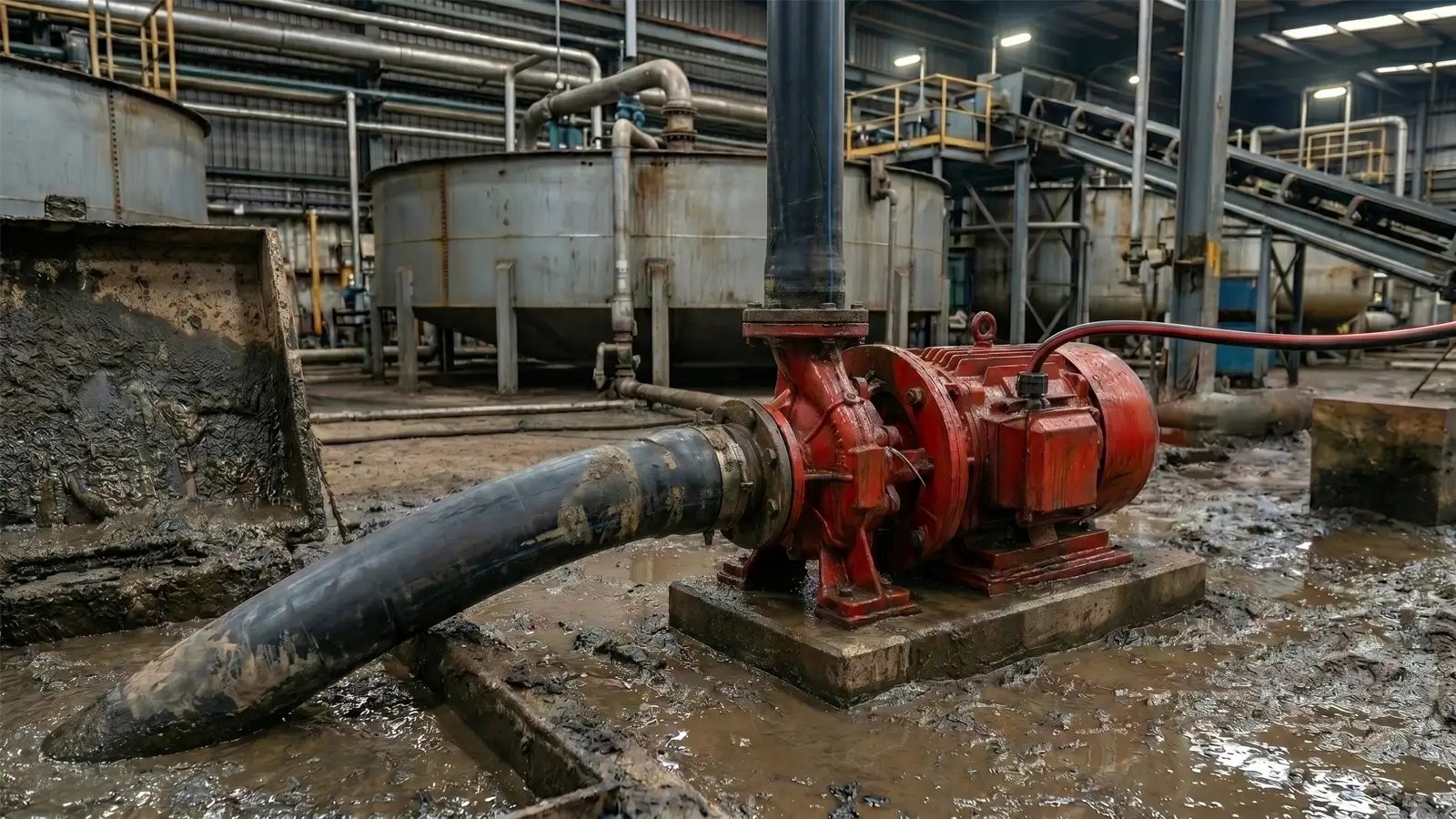
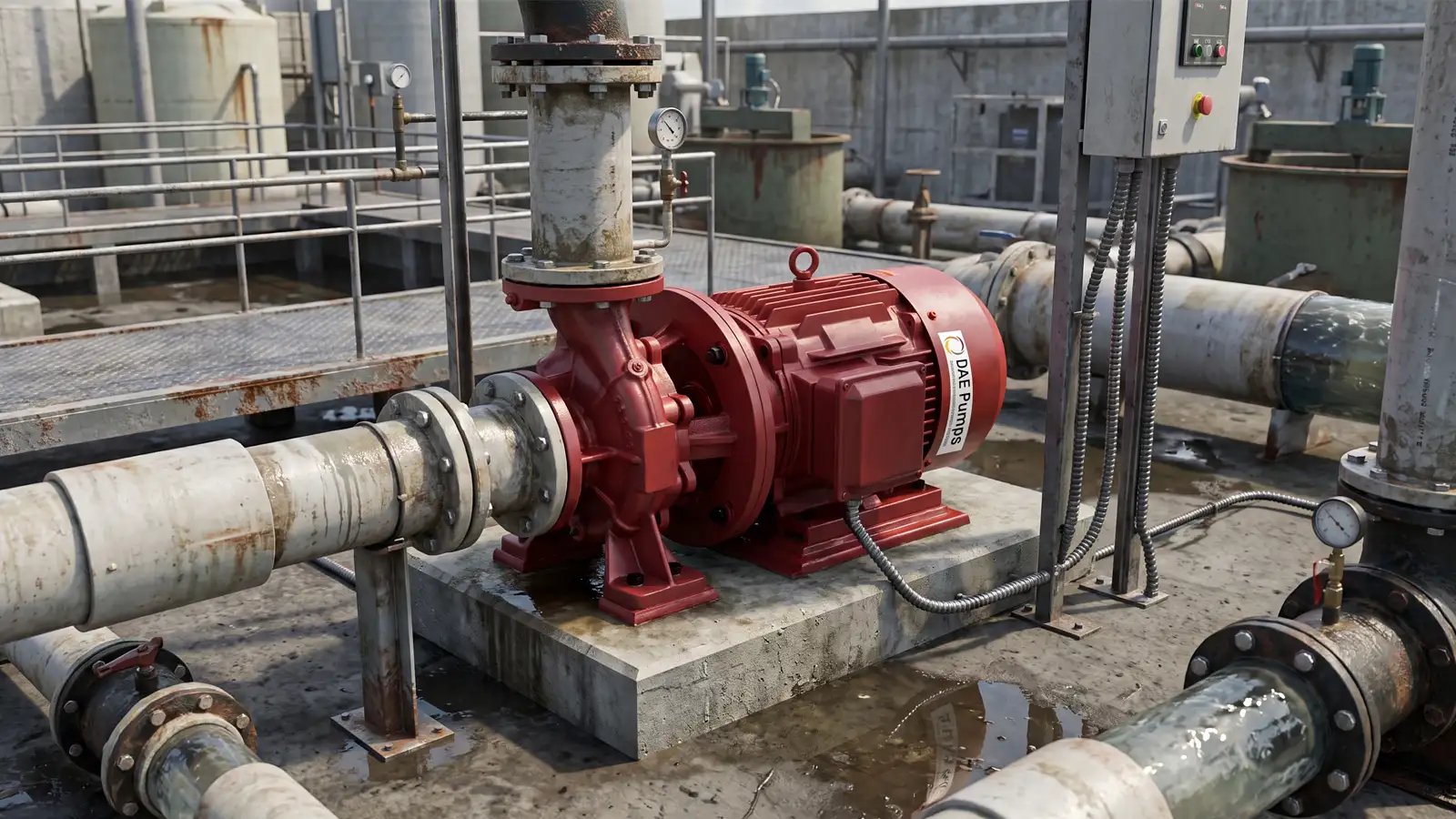
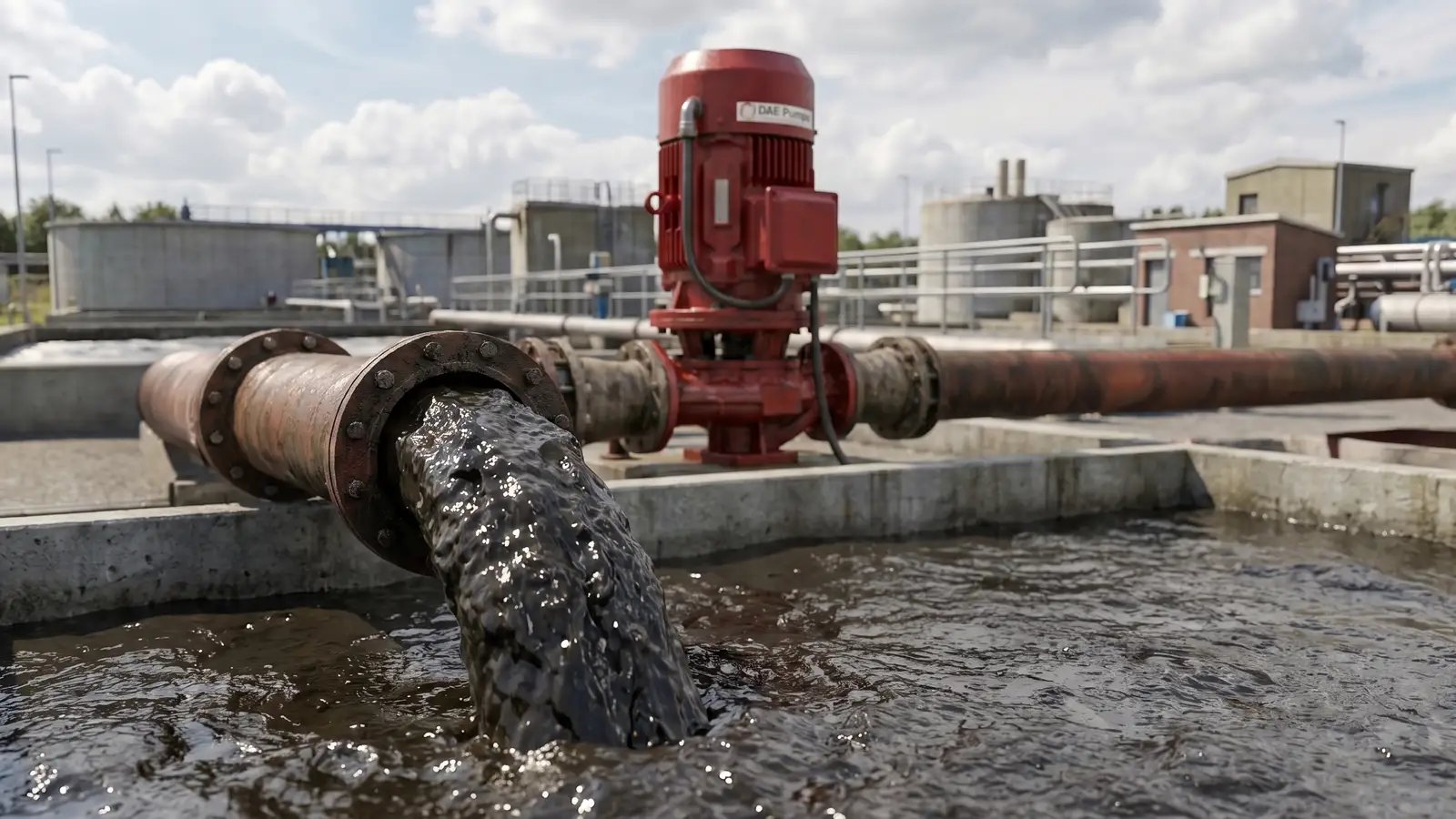
Most wastewater pump wear is not random. It usually points back to one of a few issues: abrasive grit, the wrong pump type, the wrong materials, poor flow velocity, or a pump operating too far from its intended duty point.

That matters because wastewater pumps do not just move liquid. They move water mixed with sand, grit, sludge, rags, fibers, grease, chemicals, and settled solids. When the pump is not matched to that reality, the result is predictable: faster impeller wear, seal failures, clogging, energy waste, and unplanned downtime.This guide explains how wastewater slurry pump selection affects wear and how to choose a pump that fits the actual material, not just the pipe size or the average flow rate. For a starting point, DAE Pumps offers slurry pumps and sludge pumps for wastewater treatment, industrial process water, grit handling, sludge transfer, dewatering, and high-solids service.
|
Answer-First Summary
Wastewater slurry pump selection affects wear because every pump design handles grit, sludge, solids, viscosity, and flow changes differently. The best pump is selected around the actual solids content, particle size, abrasiveness, chemistry, flow range, total dynamic head, materials of construction, and maintenance access. When those details are matched correctly, plants can reduce clogging, extend wear-part life, protect seals and bearings, and lower the total cost of ownership. |
Key Takeaways
- Abrasive solids such as sand and grit act like cutting tools inside the pump and pipeline.
- Pump wear gets worse when the pump is oversized, undersized, starved at the suction, or operated far from its intended duty point.
- Different wastewater streams need different pump styles: submersible slurry, sludge, flooded suction, self-priming, dredge, or positive displacement/lobe pumps.
- Material selection matters. High chrome, hardened wear components, rubber liners, stainless, and specialty seals should be matched to abrasion, corrosion, and chemistry.
- A good customer journey starts with the material: solids content, particle size, flow range, TDH, chemistry, and duty cycle should be reviewed before quoting the pump.
Why Wastewater Pump Wear Happens
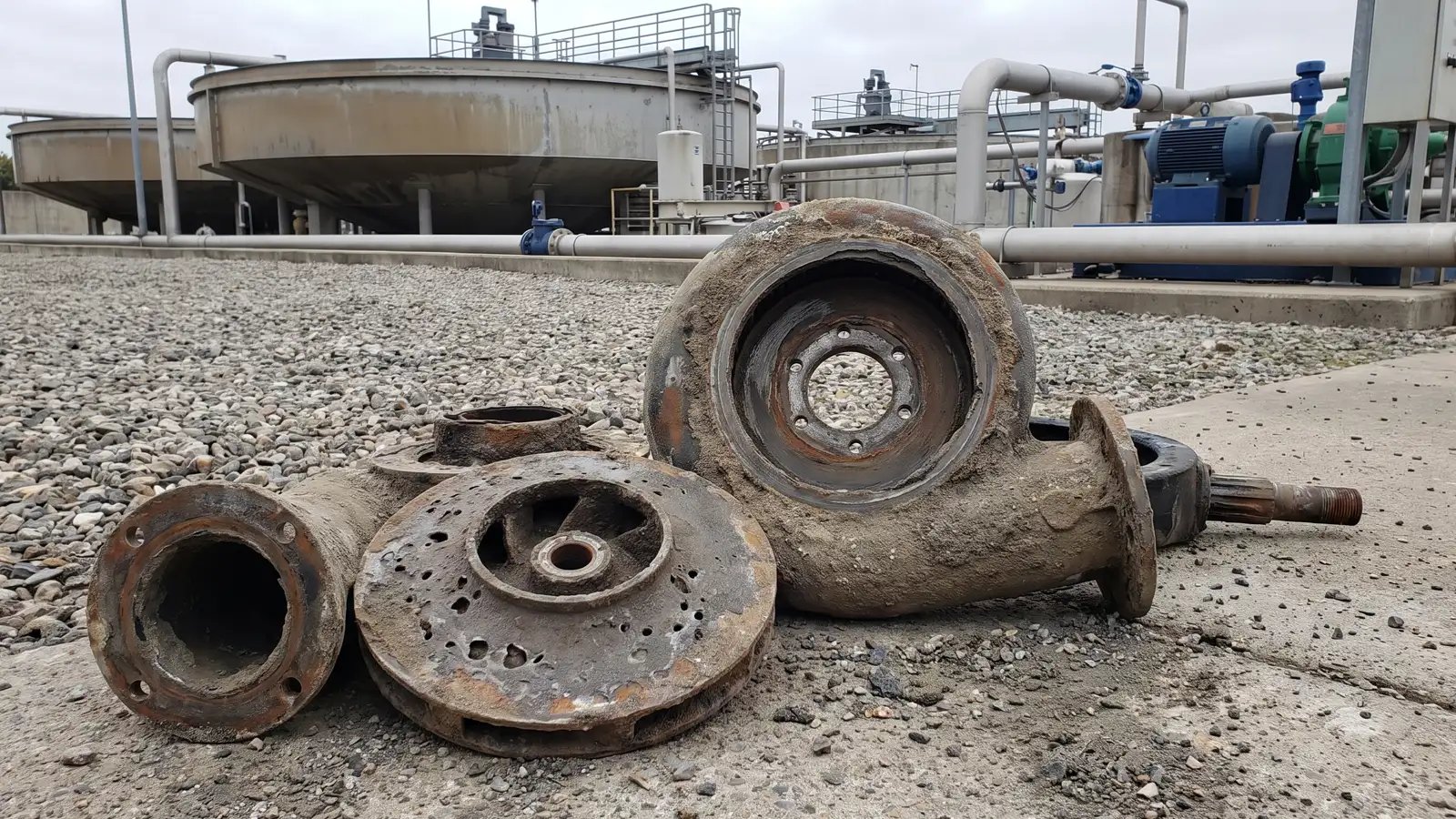
Wastewater is hard on pumps because the material changes constantly. A pump may see mostly water during one part of the day and then grit-heavy flow, thick sludge, rags, plastics, or industrial discharge during another.
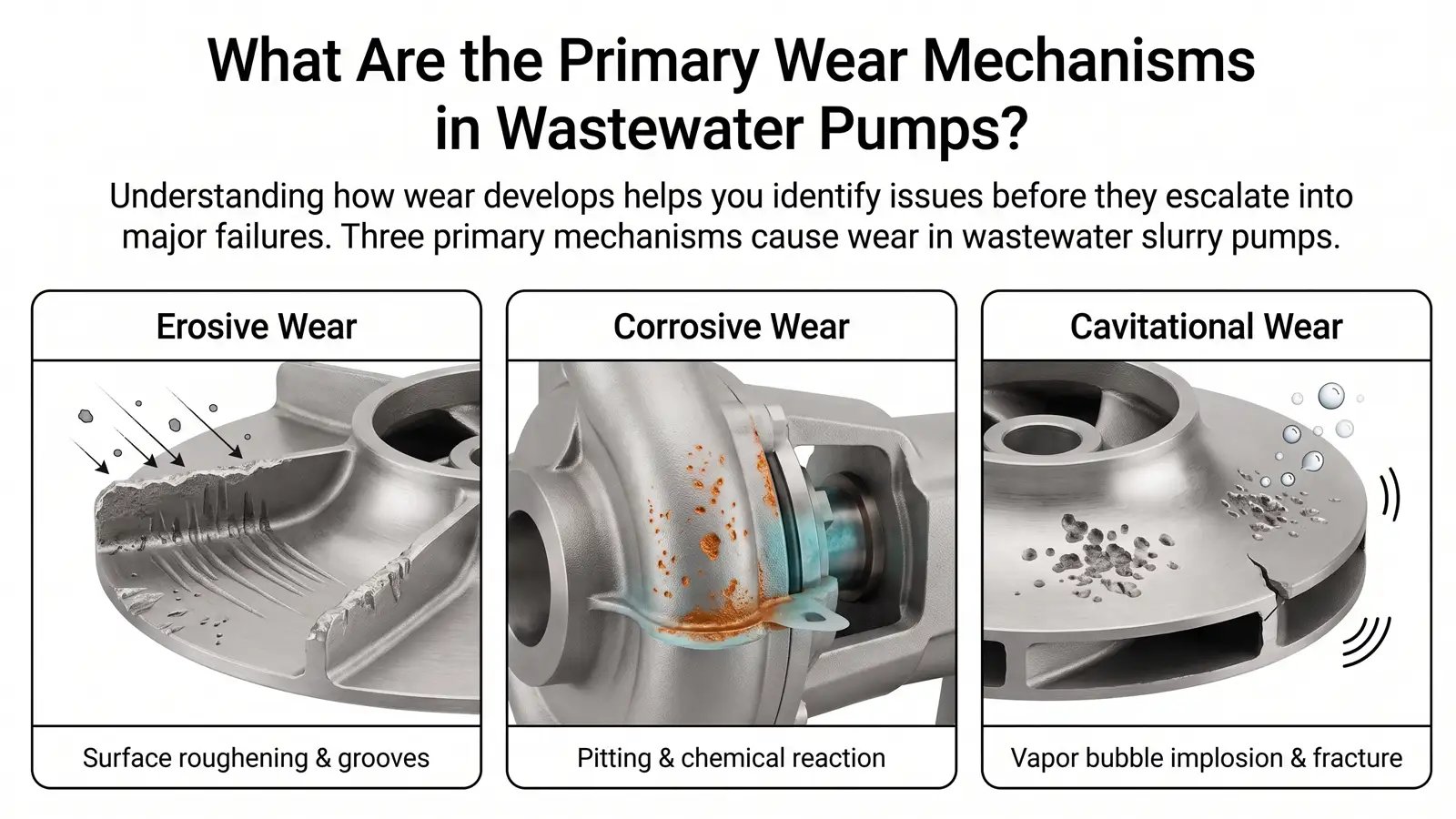 Wear usually comes from four sources:
|
Wear Driver |
What It Does |
Common Signs |
|---|---|---|
|
Abrasive grit and sand |
Cuts, scores, and erodes impellers, volutes, liners, agitators, and wear plates. |
Loss of flow, rough wear surfaces, increasing vibration, frequent wear-part replacement. |
|
Corrosion and chemical attack |
Breaks down wetted materials and accelerates erosion when abrasion is also present. |
Pitting, seal housing damage, premature casing or impeller deterioration. |
|
Cavitation or suction problems |
Creates vapor bubbles that collapse against metal surfaces and damage impeller areas. |
Noise, vibration, pitting near the impeller eye, reduced performance. |
|
Clogging and recirculation |
Keeps solids trapped inside the pump instead of moving them through the system. |
Ragging, high amperage, repeated shutdowns, excessive heat, erratic flow. |
DAE’s wastewater case study describes the same field problem: abrasive elements, grit, sludge, clogging, variable flow, and corrosion all contributed to higher maintenance and reduced pump life in a large wastewater treatment plant. Read the DAE Pumps wastewater case study.
Why Pump Selection Directly Affects Wear
The wrong pump may still move the material for a while. That does not mean it is the right pump. In wastewater applications, poor selection often shows up as frequent seal replacement, worn impellers, clogged intakes, lost flow, or pumps that are constantly being pulled for maintenance.
The selection process should answer three questions before anything is quoted:
- What material is actually being pumped on the worst day, not just the average day?
- Can the selected pump pass the largest solids, rags, grit, and debris without constant clogging?
- Can the pump stay close to the required operating range across minimum, normal, and peak flow?
Abrasive slurry pumps are built differently than clean-water pumps. DAE’s slurry pump page notes that slurry pumps are available in different types, sizes, speeds, metals, and solids-handling capabilities, and that slurry components are designed to resist abrasion and corrosion in harsh conditions.
The Pump Should Match the Wastewater Stream
Not every wastewater application needs the same pump. This is where a better customer journey helps. Instead of sending every buyer to one product, guide them based on the material and installation.
|
Wastewater Condition |
Likely Pump Direction |
Why It Helps |
DAE Link |
|---|---|---|---|
|
Grit, sand, settled solids, sump cleanout, wet wells |
Submersible slurry or sludge pump |
Places the pump at the source and uses a rugged design for abrasive solids and submerged service. |
|
|
Thickened sludge, digested sludge, scum, septage, DAF, viscous flow |
Rotary lobe / positive displacement pump |
Provides steady transfer for thicker sludge and viscous materials that may not behave like water. |
|
|
Tank, hopper, or process line with gravity-fed suction |
Flooded suction pump |
Keeps the pump fed and primed when the source can gravity-feed the suction side. |
|
|
Temporary bypass, maintenance pumping, portable field use |
Self-priming pump |
Keeps the pump above the source and supports flexible setup where access changes. |
|
|
Lagoon, basin, pond, clarifier, or settled sediment removal |
Dredge pump or dredging equipment |
Combines solids handling with agitation, positioning, or dredging support when sediment must be removed from the bottom. |
What to Know Before Selecting a Wastewater Slurry Pump
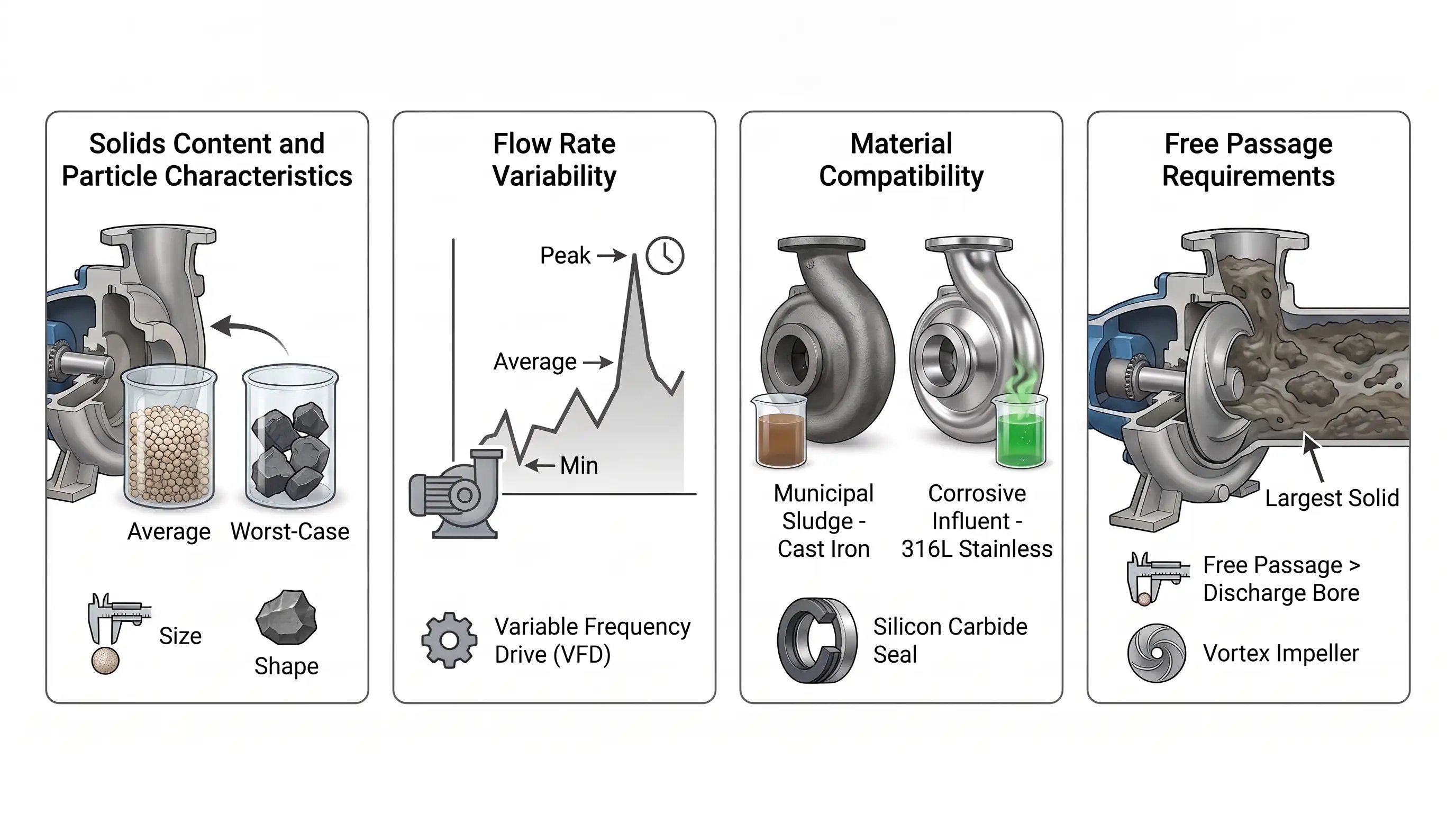
The best pump recommendation starts with the material. A pump selected from flow and discharge size alone can be wrong if the plant has grit, variable flow, corrosive chemistry, or solids that settle quickly.
|
Information to Gather |
Why It Matters for Wear |
|---|---|
|
Solids content and dry-solids percentage |
Higher solids and thicker sludge increase loading, clogging risk, and power demand. |
|
Particle size and shape |
Angular grit cuts harder than rounded particles; large solids require adequate free passage. |
|
Specific gravity / density |
Heavy grit and mineral solids increase wear and may require more power and stronger materials. |
|
Flow range: minimum, average, and peak |
Pumps that run too far from the desired operating range can recirculate, vibrate, clog, or wear faster. |
|
Total dynamic head and pipeline layout |
Pipe length, elevation, bends, valves, and friction affect the operating point and the risk of solids settling. |
|
Chemistry, pH, temperature, and corrosion risk |
Material selection must match both abrasion and corrosion, especially with industrial influent. |
|
Largest solids, rags, and fibers |
The pump, suction, discharge, and fittings must all support the largest material expected. |
|
Duty cycle and maintenance access |
Continuous service, remote sumps, and hard-to-access installations need stronger wear planning. |
For buyers still learning the basics, the DAE Pumps submersible sludge pump guide is a helpful next step because it explains flow, head, solids handling, construction materials, motor options, and controls for sludge applications.
How Pump Type Changes Wear
Submersible slurry pumps for grit, sand, and settled solids
Submersible slurry pumps are often a strong fit when grit and sludge collect in wet wells, sumps, tanks, or basins. DAE’s submersible slurry pump lineup includes 3-inch, 4-inch, 6-inch, and 8-inch models for abrasive slurries, sand, and demanding solids-handling applications.
Wear is reduced when the pump is placed close to the material, the agitator or intake helps keep solids moving, and the wet-end materials are matched to grit and sand. The pump still needs to be sized for flow, head, and duty cycle; it should not be selected by discharge size alone.
Sludge and lobe pumps for thicker wastewater sludge
When the material becomes thicker, more viscous, or more consistent with sludge transfer than gritty sump pumping, a rotary lobe or positive displacement pump may be a better fit. Lobe pumps are commonly used for thickened sludge, digested sludge, scum, septage, and feeding dewatering equipment.
This is a better customer conversation than saying one pump solves every wastewater problem. Thin, gritty flow and thick sludge do not behave the same way. Matching the pump style to the material helps reduce wear and improves reliability.
Flooded suction and self-priming options for installation constraints
If the pump is outside the wet well or connected to a tank, hopper, or process line, the installation may point toward a flooded suction pump or a self-priming pump. These options help when the buyer needs service access, portable setup, or a surface-mounted package.
Material Selection: Where Wear Is Won or Lost
The pump material should match the wastewater. Abrasion, corrosion, and chemistry do not affect every plant the same way.
|
Material / Component Choice |
Best Fit |
Customer-Facing Note |
|---|---|---|
|
High-chrome impeller, agitator, or wear plate |
High-grit, sand, abrasive sludge, mine or industrial wastewater |
Strong choice where abrasion is the main wear driver. |
|
Rubber liners or elastomer wear parts |
Fine abrasive slurry where impact is less severe |
Can reduce wear in some fine-particle applications and specific chemistries. |
|
Stainless or duplex stainless options |
Corrosive industrial wastewater, low pH, chemical exposure |
Used when corrosion risk is as important as abrasion. |
|
Silicon carbide mechanical seals |
Gritty wastewater and abrasive sludge |
Helps protect seal faces from scoring and grit damage. |
|
Agitators, open stands, and solids-handling intakes |
Settled solids, sand, grit, and slurry at the bottom of a sump or basin |
Helps feed material into the pump instead of leaving solids compacted at the source. |
For example, the DAE Tampa 4110 submersible slurry pump uses rugged cast iron construction with a high chrome iron impeller, agitator, and wear plate for abrasive slurry, sand, and demanding applications.
The Operating Point Matters as Much as the Pump
A good pump can still wear out quickly when it runs in the wrong part of the curve. Oversized pumps can create recirculation and internal turbulence. Undersized pumps may run too hard, too hot, or too fast to keep up with the actual duty point.
The goal is not just to buy a more rugged pump. The goal is to choose a pump and operating point that can keep solids moving while avoiding excessive velocity, settling, vibration, cavitation, or constant clogging.
|
Customer Journey Note
A plant manager may ask for a pump because the current unit keeps failing. The better sales conversation is to ask what is failing and why: impeller wear, seal failure, clogging, ragging, low flow, high vibration, or poor suction. The failure mode points to the selection issue. |
Operational Practices That Reduce Wear
Maintain enough velocity to keep solids moving
Flow that is too slow lets grit and sand settle. Flow that is too fast can increase impact wear. The correct velocity depends on the slurry, pipe size, and duty point.
Use VFDs where flow varies
Variable frequency drives can help keep pumps closer to the required operating range during changing plant flows.
Flush when the process allows it
Flushing pumps and lines after high-solids service helps remove abrasive buildup before it hardens or settles.
Control startup and shutdown
Abrupt starts, dry starts, and shutdowns that leave solids packed in the volute can shorten component life.
Monitor before failure
Vibration, amperage, flow, pressure, and maintenance trends often show wear before a catastrophic failure occurs.
Maintenance Signals That the Pump Is Wearing
|
Signal |
What It May Mean |
|---|---|
|
Gradual loss of flow |
Impeller wear, internal clearance changes, partial blockage, or pipeline buildup. |
|
Rising vibration |
Bearing wear, imbalance, cavitation, misalignment, or solids striking internal parts. |
|
Higher amperage or frequent trips |
Overload, clogging, thicker slurry, or the pump working outside its selected range. |
|
Seal leakage |
Grit damage, shaft wear, poor flush, incorrect seal materials, or excessive vibration. |
|
More frequent clogging |
Wrong solids passage, ragging, poor intake design, low velocity, or inadequate agitation. |
|
Visible grooves or pitting |
Abrasive erosion, corrosive attack, cavitation, or a combination of wear mechanisms. |
How DAE Pumps Helps Reduce Wastewater Pump Wear
DAE Pumps should be positioned as a solution partner, not just a pump catalog. The customer wants less downtime, less maintenance, and a pump that fits the real material. That means the recommendation should connect the pump type, materials, power, installation, and operating point.
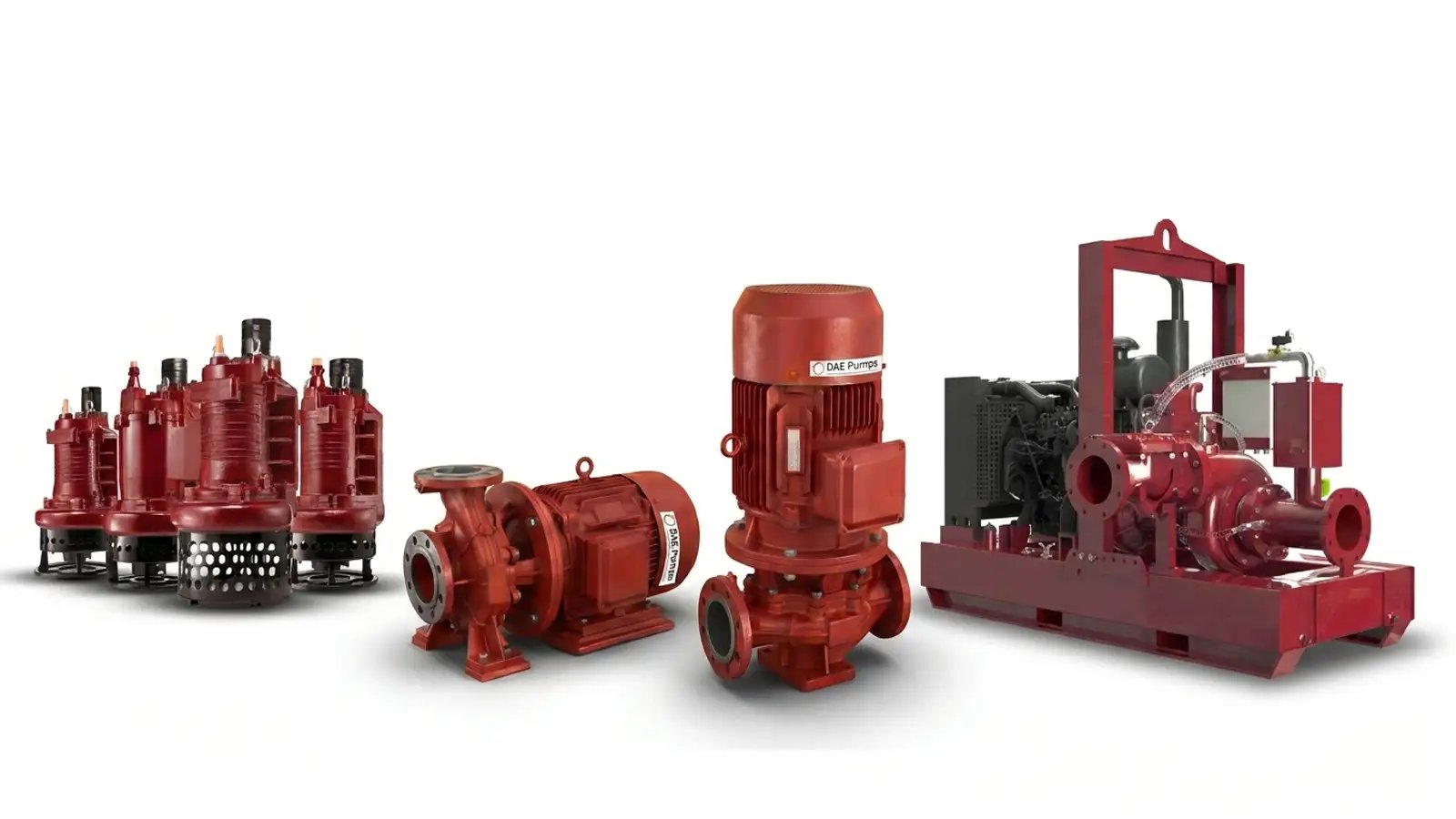
DAE Pumps offers a broad product path for wastewater and high-solids service, including submersible slurry pumps, sludge pumps, flooded suction pumps, self-priming pumps, dredge pumps, rotary lobe pumps, and accessories such as hoses, flow meters, and power units.
For a quote or application review, customers can contact DAE Pumps or request a quote with the material details, flow target, total dynamic head, solids information, and installation constraints.
What to Send DAE Pumps for a Better Recommendation
- Wastewater or sludge type: grit, primary sludge, digested sludge, DAF, septage, industrial influent, lagoon solids, or mixed material.
- Flow range: minimum, normal, peak, and desired production rate.
- Total dynamic head: elevation, pipe length, pipe diameter, bends, valves, and discharge location.
- Solids content, dry solids percentage, particle size, rags/fibers/plastics, and grit load.
- Fluid chemistry: pH, temperature, corrosive content, salinity, chemicals, and odor or gas concerns.
- Installation type: submersible, flooded suction, self-priming, portable, fixed skid, or dredging configuration.
- Power available: electric, diesel, hydraulic, VFD, generator, or plant power limitations.
- Maintenance problem you are trying to solve: clogging, seal failure, impeller wear, low flow, cavitation, or excessive downtime.
Frequently Asked Questions
Why does wastewater slurry pump selection affect wear?
Pump selection controls how the equipment handles grit, sludge, rags, corrosive fluids, variable flow, and solids loading. If the pump is the wrong type, wrong size, or wrong material, abrasive solids can recirculate, clog, or strike internal parts repeatedly, which accelerates wear.
What causes the most wear in wastewater slurry pumps?
Sand, grit, and other high-density abrasive particles are usually the biggest wear drivers. Chemical corrosion, cavitation, ragging, and poor flow velocity can make the damage worse.
What is the best pump for wastewater grit and settled solids?
For wet wells, sumps, basins, and grit-heavy service, a submersible slurry or sludge pump with abrasion-resistant materials and adequate solids handling is often the best starting point. Final selection depends on flow, head, solids size, slurry density, and installation.
When should I use a lobe pump instead of a centrifugal slurry pump?
A lobe or positive displacement pump is often a better fit for thickened sludge, digested sludge, scum, septage, DAF, and viscous wastewater where steady transfer is more important than high-volume grit pumping.
How do I know if my wastewater pump is oversized?
Oversized pumps often run far from the desired operating range, which can create recirculation, vibration, higher energy use, and accelerated wear. If a pump frequently cycles, runs throttled, or wears quickly despite low average flow, sizing should be reviewed.
How do I know if my wastewater pump is undersized?
Undersized pumps may run continuously, overload, lose flow during peak conditions, or fail to maintain the velocity needed to keep solids moving. Frequent plugging, high amperage, and poor performance during flow spikes are common signs.
What materials reduce abrasive wear in wastewater pumps?
High-chrome components, hardened wear parts, rubber liners, silicon carbide seals, and corrosion-resistant alloys may all be used depending on the material. The right choice depends on grit, particle size, chemistry, pH, temperature, and expected service life.
Can better operation reduce pump wear without replacing the pump?
Yes. Maintaining proper flow velocity, using a VFD where appropriate, flushing after high-solids service, controlling startup and shutdown, and tracking vibration or pressure changes can reduce wear and downtime.
What information does DAE Pumps need to recommend the right wastewater pump?
DAE Pumps should review the material, solids content, particle size, flow range, TDH, pipe layout, chemistry, installation type, available power, and current maintenance issue before recommending a pump.
Is the lowest-cost wastewater pump the best option?
Not usually. The lowest purchase price may become the highest lifecycle cost if the pump clogs, wears quickly, uses excess energy, or requires frequent repair. The better question is which pump reduces downtime and cost over the full operating life.
Conclusion: The Right Pump Reduces Wear Before It Starts
 Wastewater pump wear cannot be eliminated, but it can be managed. The key is choosing the right pump for the actual material, not the easiest specification on the page.
Start with the solids, the flow range, the total dynamic head, the chemistry, and the failure mode you are trying to fix. Then match the pump type, materials, solids handling, power, and maintenance access to those conditions.
DAE Pumps can help review the application and recommend the right wastewater slurry pump, sludge pump, or dredging configuration for the job. Request a quote or application review from DAE Pumps.